Shift Patterns UK 2026: Types, Rules and Worker Rights

Managing employees with different working hours and shifts can be difficult. Some businesses need staff to work early mornings, night shifts or weekends, while others need teams to cover 24 hours a day. Without a proper shift pattern, it can become difficult to organise working hours, manage staff availability and make sure every shift has enough people. This can lead to staff shortages, uneven workloads and problems with employee rest periods.
That’s why businesses use different shift patterns to organise working hours more effectively. A shift pattern gives you a clear structure for when employees work and when they have time off. In this guide, we explain 16 common shift patterns used in the UK, with examples, pros and cons, and the legal requirements employers need to know.
What Is a Shift Pattern?
A shift pattern is the set schedule that decides when each worker or team works and rests. It covers start and finish times, which days people work and how shifts rotate over a week, fortnight or longer.
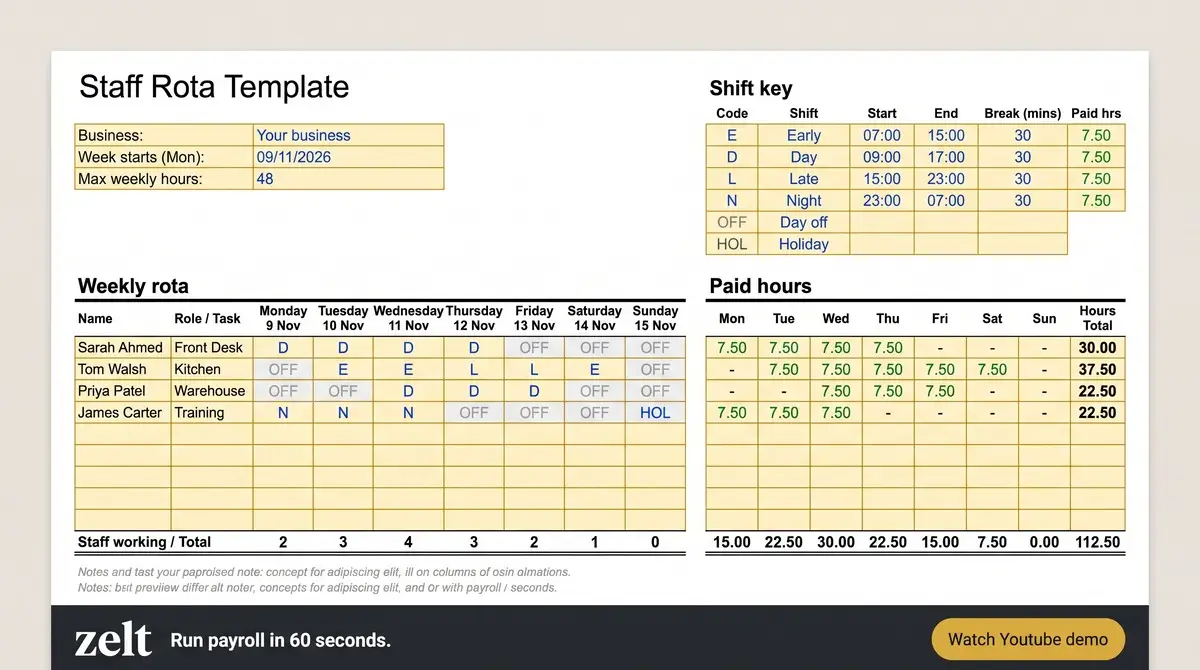
For example, a factory might run a pattern where Team A works four 12-hour day shifts, then has four days off, while Team B covers the gaps. Many businesses also use a rota template to plan their shift patterns each week.
See how Zelt brings payroll, HR, and people management together in one connected platform.
Why Do Businesses Use Shift Schedules?
Rota arrangements let a business operate for longer than a normal working day. Some need to run 24 hours a day, seven days a week. Others just need to cover early mornings, evenings or weekends.
Common reasons include:
- Round-the-clock services: hospitals, care homes, police and emergency services never close.
- Making the most of equipment: factories can keep expensive machines running instead of stopping every evening.
- Meeting customer demand: shops, restaurants and contact centres need staff when customers want them.
- Covering peak times: warehouses and delivery firms often need more people during busy seasons.
- Global working: some teams work with customers or colleagues in other time zones.
Shift work can also suit employees. Some people prefer nights for the higher pay, or like having several days off in a row after a run of long shifts.
Types of Shift Patterns in the UK (With Examples)
There is no single best shift pattern. The right one depends on your opening hours, your team and the type of work. Here are 16 of the most common shift patterns used in the UK.
Fixed Shifts and the Traditional 9 to 5
With fixed shifts, people work the same hours on the same days every week. The traditional 9 to 5, Monday to Friday, is the best-known example.
Fixed shifts are simple to plan and easy for staff to fit around family life. They suit offices, banks and many admin roles. They do not work well if you need cover outside normal hours.
Night Shifts
Night shifts cover the hours when most people are asleep, often from around 10pm to 6am. They are common in care, hospitals, security, logistics and manufacturing.
Some staff work permanent nights. Others rotate between days and nights. Night work has extra legal rules in the UK, which we cover later in this guide.
Weekend Shifts
Weekend shifts cover Saturdays and Sundays. Some businesses hire weekend-only staff, while others share weekend work across the whole team on a rota.
For example, a garden centre might employ students for weekend shifts during its busiest months. Sharing weekend work fairly is important, as it is often the least popular time to work.
Rotating Shifts
With rotating shifts, staff move between different shifts over time. For example, someone might work mornings one week, afternoons the next and nights the week after.
Rotating shifts share unpopular hours fairly. However, frequent changes can disrupt sleep. Health and safety guidance generally suggests rotating forwards, from mornings to afternoons to nights, as this is easier for the body to adjust to.
Split Shifts
A split shift is one working day broken into two parts with a long unpaid gap in between. For example, a restaurant worker might work 11am to 3pm, then 6pm to 10pm.
Split shifts help businesses cover busy periods without paying staff during quiet times. But long days and travel back and forth can be tiring, so they need careful planning.
Staggered Shifts
With staggered shifts, people start and finish at different times, rather than all at once. For example, one person starts at 7am, another at 8am and another at 9am.
This helps cover busy periods smoothly and avoids everyone leaving at the same moment. It is common in contact centres, shops and offices that open early or close late.
Earlies and Lates
Earlies and lates split the day into an early shift and a late shift. An early might run from 6am to 2pm and a late from 2pm to 10pm.
This pattern is common in care homes, hospitals, retail and hospitality. Staff may work a mix of earlies and lates each week, or stick to one type.
Two-Shift (Double Day) Pattern
The two-shift or double day pattern uses two teams to cover around 16 hours a day. One team works mornings and the other works afternoons, often swapping each week.
For example, Team A works 6am to 2pm this week while Team B works 2pm to 10pm. Next week, they switch. It is popular in manufacturing because it extends production without needing night shifts. Many manufacturers use Zelt for manufacturing to plan shift patterns like this and track hours automatically.
5 Over 7 Shift Pattern
In a 5 over 7 pattern, people work five days a week, but those days can fall on any day from Monday to Sunday. Their two days off change from week to week.
For example, a retail assistant might work Monday to Friday one week and Wednesday to Sunday the next. It gives employers seven-day cover while keeping a standard five-day working week.
12-Hour Shift Patterns
12-hour shifts mean fewer, longer working days. A typical day shift runs from 7am to 7pm, and a night shift from 7pm to 7am.
Many staff like 12-hour shifts because they get more full days off. But long shifts can be tiring, especially on nights or in physically demanding jobs. Several popular patterns, such as 4 on 4 off and Panama, use 12-hour shifts.
4 On 4 Off Shift Pattern
With 4 on 4 off, staff work four 12-hour shifts in a row, then have four days off. The cycle repeats every eight days, so working days move around the calendar.
This works out at an average of 42 hours a week. Some versions alternate between four days and four nights, for example four days on, four off, four nights on, four off. It is common in warehouses, manufacturing and security.
Continental Shift Pattern
The continental shift pattern provides 24/7 cover using four teams and quick rotations. A common version uses 8-hour shifts, such as two mornings, two afternoons and two nights, followed by two days off.
Because staff do only a few shifts of each type before moving on, they avoid long runs of nights. The downside is that frequent changes can be hard for some people to adjust to.
Panama Shift Pattern
The Panama pattern, also called the 2-2-3 pattern, uses four teams on 12-hour shifts to cover 24/7. Over a 14-day cycle, a team works two days, has two off, works three, then has two off, works two and has three off.
| Week | Mon | Tue | Wed | Thu | Fri | Sat | Sun |
|---|---|---|---|---|---|---|---|
| Week 1 | Work | Work | Off | Off | Work | Work | Work |
| Week 2 | Off | Off | Work | Work | Off | Off | Off |
The big benefit is that every team gets every other weekend off. Staff never work more than three shifts in a row.
Open Shifts
Open shifts are shifts that have not yet been given to anyone. Employers post them so staff can choose to pick them up.
For example, a care home might post an extra night shift when someone is off sick. Staff who want more hours can claim it. Open shifts give flexibility, but you still need to check rest rules before someone accepts.
Compressed Workweeks
A compressed workweek fits full-time hours into fewer days. For example, someone could work 37.5 hours over four days instead of five, or work a nine-day fortnight.
This gives staff an extra day off without cutting their hours. It can be a good option for flexible working requests, though longer days do not suit every role.
Flexible and Custom Shifts
Some businesses design their own patterns to fit their needs. Others let staff choose their own start and finish times within set limits, sometimes called flexitime.
For example, an office might have core hours of 10am to 3pm, with staff choosing when to start and finish around them. Custom patterns can boost staff happiness, but they need clear rules so cover is never left short.
Pros and Cons of Different Shift Schedules
Every shift pattern has trade-offs. This table gives a quick summary to help you compare them.
| Shift pattern | Main pros | Main cons | Best for |
|---|---|---|---|
| Fixed shifts / 9 to 5 | Simple, predictable, good for work-life balance | No cover outside set hours | Offices and admin teams |
| Night shifts | 24-hour cover, often higher pay | Sleep and health impacts | Care, security, logistics |
| Weekend shifts | Covers busy weekends | Unpopular, can affect family time | Retail and hospitality |
| Rotating shifts | Shares unpopular shifts fairly | Can disrupt sleep | 24/7 operations |
| Split shifts | Covers peaks, lowers costs | Long days, extra travel | Restaurants, transport |
| Staggered shifts | Smooth cover at busy times | Harder to bring the team together | Contact centres, shops |
| Earlies and lates | Clear, easy to understand | Late shifts can clash with family life | Care, hospitals, retail |
| Two-shift (double day) | 16-hour cover without nights | Weekly swaps can be tiring | Manufacturing |
| 5 over 7 | Seven-day cover, five-day week | Days off change each week | Retail, hospitality |
| 12-hour shifts | More full days off | Long, tiring shifts | Warehouses, healthcare |
| 4 on 4 off | Long breaks between blocks | Working days move around the calendar | Manufacturing, security |
| Continental | Short runs of nights | Frequent changes | 24/7 factories and plants |
| Panama (2-2-3) | Every other weekend off | 12-hour shifts | 24/7 operations |
| Open shifts | Flexible cover for gaps | Less predictable for staff | Care and retail |
| Compressed workweeks | Extra day off | Longer working days | Office and some site roles |
| Flexible / custom | High staff satisfaction | Needs clear rules for cover | Office and hybrid teams |
Legal Requirements for Working Hours in the UK
Shift patterns must follow UK employment law, mainly the Working Time Regulations 1998. Here are the key rules employers need to know. This is general guidance, not legal advice.
Maximum Weekly Working Hours
Most workers cannot work more than 48 hours a week on average. This is usually averaged over 17 weeks. Workers aged 18 or over can choose to opt out of the 48-hour limit in writing. You cannot force anyone to opt out or treat them unfairly if they refuse. Some jobs, such as certain security and transport roles, cannot opt out.
Daily Rest Periods
Adult workers are entitled to at least 11 hours of rest in a row between working days. For example, if someone finishes a late shift at 10pm, they should not normally start again until 9am the next day. Shift workers who change shifts may not always get this, but they should then get compensatory rest.
Weekly Rest Entitlement
Workers are entitled to either 24 hours of uninterrupted rest each week, or 48 hours every two weeks. This matters when designing long runs of shifts. A rota that has someone working 13 days in a row may still be legal, but only if the 48-hour fortnightly rest is given.
Rest Breaks During Shifts
Workers have the right to an uninterrupted 20-minute rest break if they work more than six hours in a day. The break should be during the shift, not at the start or end.
The law does not say this break must be paid. Many employers offer longer or paid breaks through contracts, especially for 12-hour shifts.
Night Work Restrictions
A night worker is someone who regularly works at least three hours during night time, which is usually 11pm to 6am. Night workers should not work more than an average of 8 hours in each 24-hour period, and they cannot opt out of this limit. Where work involves special hazards or heavy physical or mental strain, the 8-hour limit applies to every shift. Employers must also offer night workers a free health assessment before they start and regularly after that.
Young Workers
Young workers are aged under 18 but above school leaving age. They usually cannot work more than 8 hours a day or 40 hours a week, and they cannot opt out.
They are entitled to 12 hours’ daily rest, two days’ weekly rest and a 30-minute break if they work more than 4.5 hours. They usually cannot work at night, with some limited exceptions.
Pregnant Workers
Employers must assess workplace risks for new and expectant mothers. If night work poses a risk and a doctor or midwife confirms this, you must offer suitable day work. If there is none, the worker should be suspended on full pay.
You may also need to adjust shift lengths, breaks or duties. Pregnant workers must have somewhere to rest, and should be able to lie down if needed.
Health and Safety Duties in Shift Design
Employers have a legal duty to manage risks from shift work, including fatigue. Tired workers are more likely to make mistakes and have accidents, especially at night.
The HSE’s guidance on managing shift work suggests steps such as rotating shifts forwards, limiting runs of night shifts, avoiding very early starts and planning breaks into long shifts. Include fatigue in your risk assessments, especially for safety-critical jobs like driving or operating machinery.
Equality and Indirect Discrimination Risks
A working arrangement that seems fair can still disadvantage some groups. Under the Equality Act 2010, this can be indirect discrimination unless you can show the pattern is a proportionate way of meeting a genuine business need.
For example, requiring everyone to work late evenings could disadvantage people with childcare duties, who are more often women. Weekend work could affect people with religious commitments. Shop and betting workers in England and Wales also have a right to opt out of Sunday work in many cases.
Record-Keeping Obligations
Employers must keep records that show they are following working time limits, including the 48-hour average and night work limits. These records should be kept for two years.
You should also keep records of opt-out agreements and night worker health assessments. Pay records must be kept to show you are paying at least the National Minimum Wage, usually for six years.
Overtime and Pay Rules
There is no general legal right to extra pay for overtime or night work. Overtime rates and shift premiums usually come from contracts or collective agreements.
However, a worker’s average pay for the hours they work must not fall below the National Minimum Wage. Holiday pay must also include regular overtime and shift premiums in many cases.
How to Choose the Right Work Schedule for Your Business
The best shift pattern balances what your business needs with what your people can sustain. These steps will help you choose well.
Understand Your Industry’s Needs
Start with the hours you need covered and how busy each period is. A hospital needs safe staffing 24/7, while a café may only need extra help at lunchtime.
Look at your data. When do customers arrive? When are orders highest? When do machines need to run? This tells you whether you need 24/7 cover, extended days or just help at peak times.
Ask Your Team
Your staff know what works in practice. Ask them which shifts they prefer, what they find hard and what would make rotas fairer.
You might find some people would happily work permanent nights, while others need school-hour shifts. A short survey or team meeting can save you from choosing a pattern that people quietly resent.
Balance Business Goals With Employee Wellbeing
A pattern that looks efficient on paper may wear people down. Long runs of nights, quick turnarounds and very long shifts can lead to fatigue, sickness and staff leaving.
Aim for a pattern that gives regular rest, fair weekends off and predictable hours. Happy, rested staff are safer and more productive.
Plan Ahead
Think about holidays, sickness, busy seasons and future growth. A pattern that only works when every single person turns up will fail quickly.
Build in some flexibility, such as a small pool of relief staff or open shifts. Share rotas as far in advance as you can, so staff can plan their lives.
Make Time for Rest Periods
Check every pattern against the legal rest rules before you use it. That includes 11 hours between shifts, weekly rest and breaks during long shifts.
Watch for quick changeovers, such as a late shift finishing at 10pm followed by an early start at 6am. These are tiring and may break daily rest rules.
Consider Overtime
Some overtime is normal, but relying on it to fill gaps is risky. It is expensive, it tires people out and it can push staff over the 48-hour average.
If you keep needing overtime, your pattern or staffing levels may need to change. Track overtime by person and by team, so you can spot problems early.
Practical Steps to Implement a New Shift Schedule
Introducing new working arrangements takes careful planning. Follow these four steps to make the change smoother for everyone.
1. Planning and Preparation
Be clear on why you are changing the pattern and what you want it to achieve. For example, you might want to cut overtime, cover a new evening shift or reduce fatigue.
Gather data on current hours, overtime, absence and demand. Check employment contracts to see what changes you are allowed to make, and whether you need to consult staff or a trade union.
2. Designing the Shift Pattern
Draft one or two possible patterns. Test them against your cover needs, budget and legal rest rules.
Get input from supervisors and a few staff from different teams. Run a trial on one team or site if you can. This helps you find problems before they affect everyone.
3. Communicating the Change
Explain the change clearly and early. Tell staff why it is happening, what will change for them and when it starts.
Give people time to ask questions and raise concerns, especially about childcare, travel or second jobs. Put the final pattern and any contract changes in writing.
4. Monitoring and Refining
After the change, keep a close eye on how it is working. Track absence, overtime, staff turnover and feedback.
Hold a review after three months. Be willing to adjust the pattern if something is not working, such as a shift that is always short-staffed or a changeover that leaves people exhausted.
Changing Working Arrangements: Employer Rules and Employee Rights
Changing someone’s working hours can affect their childcare, travel and income. That is why the law expects employers to handle changes carefully. Here is what you need to know.
Contractual Authority to Change Rota Arrangements
Start with the employment contract. If working hours or shift patterns are part of the contract, you usually need the employee’s agreement to change them.
Some contracts include a flexibility clause that lets you change shifts. Even then, you must use it reasonably. A clause that allows “reasonable changes to working hours” may not cover moving someone from permanent days to permanent nights.
Short-Notice Rota Changes
There is currently no general legal minimum notice period for rota changes. What counts as fair notice usually depends on the contract and on what is reasonable.
Regular short-notice changes damage trust and can make it hard for staff to arrange childcare. The Employment Rights Act 2025 is expected to introduce rights to reasonable notice of shifts, and payment for shifts cancelled at short notice, for some workers.
Consultation and Collective Obligations
Always consult staff before making major changes. Explain the reasons, listen to concerns and consider alternatives.
If you have a recognised trade union, you may need to consult or negotiate with it. If you plan to dismiss and re-engage 20 or more employees at one establishment within 90 days, collective consultation rules apply. This means at least 30 days’ consultation for 20 to 99 employees, or 45 days for 100 or more.
Imposing Changes and Unfair Dismissal Risk
Forcing through changes without agreement is risky. Staff may claim breach of contract, or resign and claim constructive dismissal.
Dismissing staff and offering them new contracts on different terms, often called “fire and rehire”, carries extra risk. A statutory code of practice on dismissal and re-engagement already applies, and the Employment Rights Act 2025 is expected to make this approach automatically unfair in most cases. Take legal advice before going down this route.
Discrimination Risks in Shift Changes
Shift changes can affect some groups more than others. For example, moving everyone to evening shifts could disadvantage parents and carers, while new weekend work could affect staff with religious commitments.
Check the impact on different groups before you decide. For disabled staff, you may need to make reasonable adjustments, such as keeping someone on day shifts for medical reasons.
Flexible Working Requests and Shift Changes
Employees have the right to request flexible working from their first day in a job. They can make up to two requests in 12 months, and you must reply within two months.
Requests might include fixed shifts, no nights, compressed hours or set days off. You must handle them reasonably and consult the employee before saying no. You can only refuse for certain business reasons, such as being unable to reorganise work among existing staff.
How to Schedule Shifts Properly
A good work schedule can still fail if the weekly rota is badly managed. These habits help you schedule shifts fairly and legally:
- Publish rotas early. Aim for at least two weeks’ notice, longer where possible, so staff can plan childcare and life outside work.
- Check rest rules every time. Make sure each rota allows 11 hours between shifts, weekly rest and breaks.
- Share unpopular shifts fairly. Rotate nights, weekends and bank holidays so the same people do not always get them.
- Match skills to shifts. Make sure every shift has someone trained for key tasks, such as a first aider or forklift driver.
- Plan for absence. Keep a list of relief staff or open shifts, so one sick day does not leave you short.
- Make swaps easy but controlled. Let staff swap shifts with manager approval, so cover and rest rules stay intact.
- Track hours and overtime. Watch for anyone close to the 48-hour average or doing too much overtime.
- Use the right tools. Rota and HR software can build rotas, flag rule breaks and share schedules on staff phones. HR platforms like Zelt can also keep holiday, absence and payroll in one place, so approved leave and hours flow straight into pay.
For example, a care home manager who publishes a four-week rota, checks rest gaps and shares weekends fairly will usually see fewer last-minute sick calls and swaps.
Final Thoughts
Managing employees across different shifts and working hours requires proper planning. You need to make sure every shift has enough staff, employees get enough rest and working hours are organised fairly. Choosing the right schedule can help you avoid staff shortages, reduce fatigue and keep your business running smoothly.
The best shift patterns depend on your business needs, team size and operating hours. Whether you need fixed shifts, rotating schedules or 24-hour cover, choose an arrangement that works for both your business and employees. Make sure you also follow UK working time rules when planning your rotas.