UK Minimum Wage Rates 2026: What You Need to Know
In the UK, National Minimum Wage or National Living Wage is the minimum hourly rate workers are legally entitled to receive from their employer. But these rates change every year and depend on your age and whether you are an apprentice.
In this guide, I have covered everything you need to know about the UK minimum wage in 2026. From the current rates to who actually gets it and everything related to minimum pay in the UK.
UK Minimum Wage Rates 2026
Here are the rates that apply from 1 April 2026 onwards:
| Age Group | Hourly Rate |
|---|---|
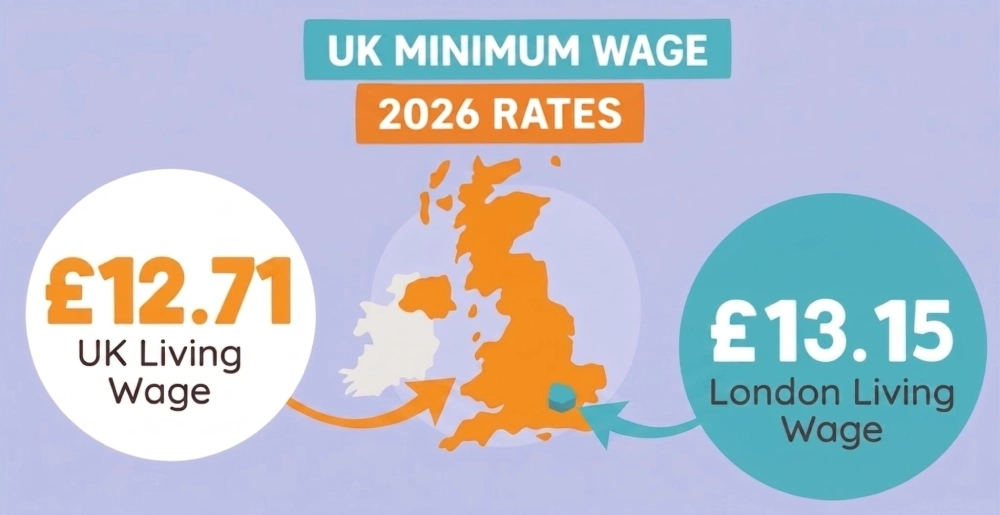
| 21 and over (National Living Wage) | £12.71 |
| 18 to 20 | £10.85 |
| Under 18 | £8.30 |
| Apprentice rate | £8.30 |
Keep in mind, these numbers usually get reviewed and updated every April, so it is worth checking closer to the time if you are reading this later in the year.
What Is the Minimum Wage?
UK minimum wage is the standard pay an employer is legally required to pay an employee for their work. NMW or National Minimum Wage in the UK, is set by the UK government and depends on age and apprenticeship status. Minimum wage is divided into the following two categories:
- The National Living Wage (NLW): For those aged 21 or over
- The National Minimum Wage (NMW): For those under 21 (or apprentices)
What Is the National Minimum Wage (NMW)?
The National Minimum Wage is the lowest amount per hour that most workers in the UK are legally allowed to be paid. It does not matter how small the business is or what industry it is in, if you are classed as a worker, your employer has to pay you at least this much. It is one step before NLW.
What Is the National Living Wage (NLW)?
The National Living Wage is basically the top rate of minimum wage, and it applies to workers who are 21 and over. A few years back it only applied to over 23s, but the age limit was lowered, so now more workers get this higher rate.
What Is the Real Living Wage (RLW)?
Now this one confuses almost everyone, so let’s clear it up properly.The Real Living Wage is not a legal requirement. It is a voluntary rate calculated by the Living Wage Foundation based on what people actually need to live on, things like rent, food, and bills. Employers can choose to sign up and pay it, but they don’t have to by law.
The National Living Wage is set by the government and it is compulsory. The Real Living Wage is worked out independently and it is optional, but usually it is higher than the government rate. Some big and small companies pay the Real Living Wage anyway because they believe their staff deserve it, and it also helps them attract better talent.
What is the London Living Wage?
The London Living Wage is a voluntary hourly rate overseen by the Living Wage Foundation. As London has a high cost of living, this foundation proposes pay rates separate for London and separate for the rest of the UK. They announce the new rate every year during Living Wage Week, which falls in the first week of November. It is a bit higher than the standard National Living Wage since living costs in London are generally higher than the rest of the UK.
Currently, in 2026, the London Living Wage is £14.80.
Accommodation Offset Rate
If your employer provides you with a place to stay, they are allowed to count some of that value towards your minimum wage, but there is a daily limit on it. Right now the accommodation offset sits around £10.66 a day. Anything above that, your employer cannot deduct from your wage.
Who Is Entitled to the National Minimum Wage?
Most workers are entitled to it, including:
- Part-time and full-time staff
- Casual workers and agency workers
- Home workers
- Trainees, on probation, or not
- Disabled workers
Who Is Not Entitled to the Minimum Wage
A few groups don’t get it, like:
- Self employed people running their own business
- Volunteers or people doing voluntary work
- Company directors (unless they have an employment contract)
- Members of the armed forces
- Family members working in a family business, living in the family home
Apprentices and the Minimum Wage, Special Rules
Apprentices get their own rate, but only if they are either under 19, or 19 and over but still in the first year of their apprenticeship. Once they pass 19 and finish that first year, they move onto the normal rate for their age group. So a 22 year old apprentice in year two would get the full 21 and over rate, not the apprentice one.
How the Minimum Wage Is Calculated
It is not as simple as just dividing your pay by hours worked. There are rules around what counts and what does not.
What Counts as Working Time
This includes your normal working hours, training you are made to do, and time spent travelling for work during the day (not your normal commute though). Time on call at your workplace usually counts too.
Deductions That Can Be Made Before NMW Is Calculated
Some deductions from your pay are allowed before working out if you are getting minimum wage, like tax, national insurance, and things you have agreed to like pension contributions. But things like uniform costs or tools your employer makes you buy usually cannot bring your pay below minimum wage.
What Doesn’t Count Towards the Minimum Wage
Tips and service charges do not count, even if your employer says they do. Same goes for extra benefits like meals, gym memberships or the value of a company car.
Previous UK Minimum Wage Rates
If you need to check what the rate was in past years, here is a quick look.
Rates 2024 to 2026
| Age Group | Rate (Apr 2024 to Mar 2026) |
|---|---|
| 21 and over | £11.44 |
| 18 to 20 | £8.60 |
| Under 18 | £6.40 |
| Apprentice | £6.40 |
Rates 2021 to 2024
| Age Group | Rate |
|---|---|
| 23 and over | £9.50 |
| 21 to 22 | £9.18 |
| 18 to 20 | £6.83 |
| Under 18 | £4.81 |
| Apprentice | £4.81 |
Rates Before 2021
Before April 2021, the top rate only applied to workers aged 23 and above, and it was lower too, sitting around £8.72. Before that it keeps going down the further back you look, all the way to 1999 when it started around £3.60.
Minimum Wage for Employers: What You Need to Do
If you run a business and employ people, this bit is for you.
Keeping Accurate Pay Records
You need to keep records showing you are paying at least the minimum wage, and keep them for at least 3 years. If HMRC ever checks, you will need to show these.
Right to Work and Payslip Requirements
Every worker needs a payslip that shows their pay clearly, and you have to make sure they have the right to work in the UK before you hire them.
Penalties for Underpaying Staff
If you don’t pay minimum wage, even by mistake, HMRC can fine you up to 200% of what you owe the worker, and in bad cases, you could be named publicly or even taken to court. So it really is not worth the risk of getting it wrong.
What to Do If You’re Being Paid Less Than the Minimum Wage
If you’re being paid less than the UK Minimum Wage, here are the things you can do:
How to Check If You’re Being Underpaid
Start by working out your hourly rate properly, take your total pay for the period and divide it by the hours you actually worked, not just your contracted hours. If that number comes out lower than the rate for your age group, something is wrong.
How to Complain to HMRC
You can raise it with your employer first if you feel comfortable doing that, but if not, you can complain directly to HMRC using their online form. It is confidential and you don’t need to have left the job to do it.
All Your Wage Data, Sorted in One Place
Keeping hourly pay accurate every month can get messy, especially with a growing team. This is where a cloud-based payroll software like Zelt helps.
Zelt applies each employee’s hourly rate automatically once their timesheet is approved, so pay is always based on actual hours worked. If someone falls short of their contracted hours, Zelt tops up their pay automatically, and payroll won’t run until timesheets are approved, so nothing gets processed on incomplete data.
If you want to simplify your hourly pay process, it is worth checking out what Zelt can do for your payroll.
Frequently Asked Questions
How many UK workers are on minimum wage?
There are around 1.5 million workers in the UK who are paid at the minimum wage rate or around it. However, this number moves around a bit each year.
Is minimum wage the same across the UK?
Yes, the UK minimum wage is the same across England, Scotland, Wales and Northern Ireland.
Does minimum wage apply to under 18s or students?
Yes, but at the lower rate for their age group. Being a student does not exempt anyone from getting at least the minimum wage.
Can I be paid in tips instead of minimum wage?
No. Tips cannot be used to make up your minimum wage, your base pay before tips has to meet the legal rate on its own.
When Does the Rate Change Each Year?
Normally, the rate changes once a year on 1 April.
Why Does the Minimum Wage Keep Rising?
The minimum wage in the UK rises so low-paid workers can be protected from continuing inflation and high household living costs. The UK government gets advice from the Low Pay Commission, which looks at things like inflation, wage growth and the state of the job market before deciding what the new rate should be.