Best Talent Management Software UK (2026): 8 Top Picks

Hiring the right people is hard, but managing their performance and helping them grow is also important. That’s why UK employers and HR teams look for the right talent management software to track progress, identify areas for improvement and help employees perform at their best.
In this guide, we have researched and compared the 8 best talent management tools for UK businesses in 2026. We compare their features, pros, cons and UK pricing to help you find the right fit for your team.
Best Talent Management Software: Quick Comparison
Short on time? Here is a quick look at the 8 best talent management software for UK small- to mid-sized businesses in 2026 and who each one suits best.
| Software | Best for | Typical company size | UK payroll | Starting price |
|---|---|---|---|---|
| Zelt | UK teams wanting HR, payroll and Performance in one place | Small to mid-sized | Yes, built in | From £5/employee/month |
| Workday HCM | Large organisations | Enterprise | Yes, via Workday Payroll UK | Custom quote |
| HiBob | Growing mid-sized teams | 50 to 2,000+ staff | Via partners and add-on | From £8/employee/month |
| Sage People | UK mid-market and multi-country teams | Mid-sized to large | Via Sage payroll and partners | From £8/employee/month |
| Personio | UK and European SMEs | 10 to 2,000 staff | Via integrations in the UK | From £6/employee/month |
| Ciphr | UK-built all-in-one option | Mid-sized | Yes, Ciphr Payroll | From £7/employee/month |
| BambooHR | Small businesses | Under 500 staff | No (payroll is US only) | From £8/employee/month |
| Deel HR | Remote and international teams | Any size | Via Deel payroll and EOR | From £22/employee/month |
Note: Pricing is indicative based on publicly available information; please confirm with the vendor for the latest rates.
How We Chose These Tools
We looked at each tool through the eyes of a UK business owner or HR manager. A tool had to help you hire, develop and keep people, not just store staff records.
We judged every option on the same six points:
- Talent features: onboarding, performance reviews, goals, feedback, learning and succession planning.
- UK fit: support for UK payroll, right to work checks, holiday rules.
- Data protection: UK GDPR support and clear information on where your data is stored.
- Ease of use: how quickly managers and staff can learn it without training days.
- Integrations: links to payroll, accounting, Slack, Microsoft Teams and recruitment tools.
- Value: what you get for the price and how clear the pricing is.
No tool is perfect for everyone. A 30-person agency and a 5,000-person retailer need very different things, so we show who each tool suits best.
What Is Talent Management Software?
Talent management software is a tool that helps you manage your people from their first day to their last. It covers how you hire, welcome, train, review and grow your staff.
Think of it as one home for every stage of an employee’s journey. Instead of using one tool for hiring, a spreadsheet for reviews and email for training, everything sits in one system. Most talent management systems include some or all of these features:
- Recruitment: post jobs, track applicants and share CVs with hiring managers.
- Onboarding: send contracts, collect right to work documents and set up first-week tasks.
- Performance management: run reviews, set goals and track one-to-one meetings.
- Feedback and engagement: collect peer feedback and run staff surveys.
- Learning and development: assign training courses and track who has completed them.
- Succession planning: spot future leaders and plan who could step into key roles.
- Compensation: plan pay reviews and bonuses using performance data.
For example, a manager could see that a sales executive hit every goal this year, finished their leadership course and is ready for promotion. That is all in one profile, not five different files.
Benefits of Talent Management Software
The biggest benefit is simple. You stop losing time on admin and start spending it on your people. Here is how that shows up day to day.
Faster Hiring and Onboarding
A good system lets you post a job, screen applicants and send an offer from one screen. Hiring managers can leave feedback on candidates without long email chains.
Once someone accepts, onboarding starts automatically. New starters can sign their contract, upload right to work documents and fill in bank details before day one. UK employers must check every new hire’s right to work, and digital records make it easier to show you did this. The result is a smoother first week. Your new starter spends day one meeting the team, not filling in forms.
Better Performance Reviews and Feedback
Annual reviews often feel rushed because managers try to remember a whole year. Talent management software keeps goals, notes and feedback in one place all year round.
This makes reviews fairer and quicker. A manager can open an employee’s profile and see their goals, peer feedback and one-to-one notes before the meeting. Regular feedback also matters to staff. Gallup research suggests employees who get meaningful feedback every week are much more likely to be engaged at work.
Lower Staff Turnover
Replacing staff is expensive. Research by Oxford Economics for Unum found that replacing one employee cost UK businesses about £30,614 on average, once lost productivity was included.
Talent management tools help you spot problems early. Engagement surveys can show which teams feel unhappy. Learning plans and clear career paths give people a reason to stay and grow with you. For example, if a survey shows your warehouse team feels overlooked for promotion, you can create a training path into supervisor roles before people start leaving.
Top 8 Talent Management Software in the UK
Here is our detailed look at Top 8 Talent Management Software for UK SMBs in 2026. We use the same headings for every option so you can compare them easily.
Zelt: Best for UK small and mid-sized businesses
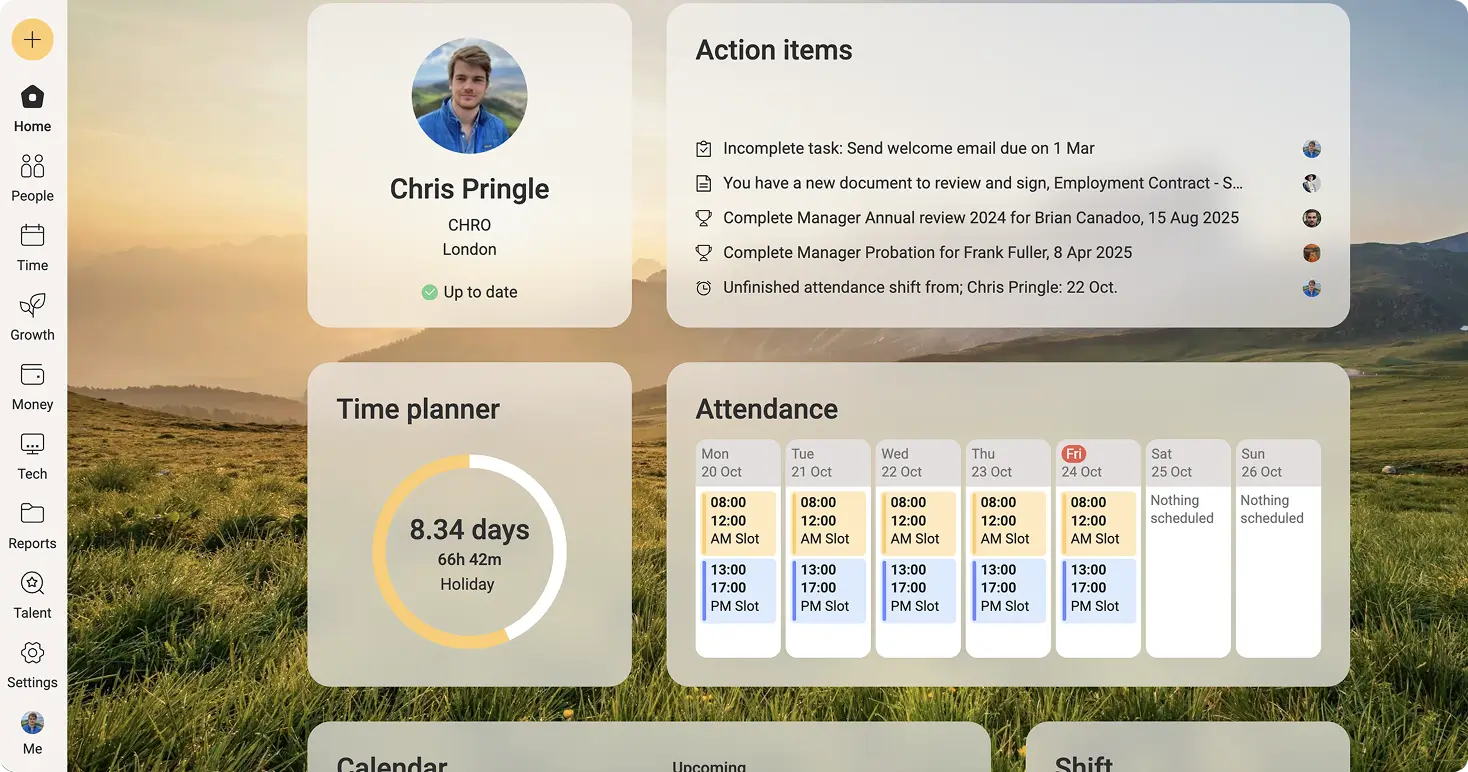
Zelt is a UK-based all-in-one platform that UK small- to mid-sized businesses use to streamline talent management along with core hr operations and payroll. It brings HR, payroll, and performance together in one system. Its talent tools cover the full employee lifecycle, from vacancy request to hiring, onboarding, performance reviews and development. Everything is connected to the same employee record, so data flows from candidate to employee without rekeying.
Who It’s Best For
Zelt suits UK small and mid-sized businesses that want hiring, onboarding and performance management in one place, alongside HR and payroll. It works well for growing teams that want structured, fair talent processes without the cost and complexity of an enterprise suite.
Key Features
- Built-in applicant tracking system with vacancy approvals, blind screening, candidate self-booking for interviews and scorecards
- Job posting to the careers site and 100+ job boards, including LinkedIn and Indeed
- Digital offer letters with e-signatures, automated reference collection and DBS checks
- Onboarding flows covering contracts, documents, payroll details, laptops and app access
- UK payroll run inside the same system as your HR data
- 360° performance reviews, scheduled or triggered automatically by events such as probation end
- Company and individual goals with measurable key results
- Engagement surveys with heatmaps and impact analysis
- Training records with expiry tracking and automated reminders
The link between hiring and onboarding is a real time saver. When a candidate accepts an offer, their details flow straight into onboarding, IT setup and payroll, so they’re ready to go from day one.
Pros:
- Hiring, onboarding, performance and payroll in one platform
- Built for UK businesses, with right to work, DBS and P45 handling part of the flow
- Strong analytics, including radar charts, survey heatmaps and DE&I hiring reports
- Modular, so you pay only for what you use
Cons:
- Not the best fit for very small teams or companies with 1000+ headcounts
- Large enterprises with complex, established HR systems may find it a lighter fit, as Zelt is built for small to mid-sized businesses
Pricing
Zelt pricing starts from £5.00 PEPM and includes one live job posting and up to three review, survey and goal cycles. Zelt works on modular pricing, so you choose the parts you need. You can book a demo for a quote.
Integrations
Zelt connects with ATS platforms such as Teamtailor, Workable and Screenloop, and with Zinc for background checks. It also works with Google Workspace, Microsoft 365 and Slack, plus EOR providers such as Deel, Remote and Oyster.
G2 Review: “I particularly love the performance growth module as it has made my review process so much easier. I have ratings available, I am no longer chasing for managers or staff to complete, Zelt does this for me” — Claire Castle, HR Director @ Croci Collective
See Zelt in Action
Speak to us to see how Zelt simplifies performance reviews with 360 feedback and AI insights.
Workday HCM: Best for Large Organisations
Workday HCM is one of the best-known enterprise HR platforms. It brings HR, payroll, recruiting, learning and talent planning into a single cloud system.
Who It’s Best For
Workday suits large UK and global organisations, usually with thousands of staff. It works best when you have an HR systems team or partner to run it.
Key Features
- Workday Recruiting for hiring at scale
- Performance, goals and talent reviews
- Succession planning and talent pools
- Workday Learning for training and courses
- Skills tracking to match people with roles and projects
- Workday Peakon Employee Voice for engagement surveys
For example, a national retailer could use Workday to spot store managers ready for area roles and assign them leadership training.
Pros and Cons
Pros
- Very deep talent and succession features
- Strong reporting and workforce planning
- Handles complex, multi-country organisations
Cons
- Expensive for smaller firms
- Setup can take many months and often needs a consultancy partner
- Can feel complex for occasional users
Pricing
Workday does not publish prices. You need a custom quote based on your headcount and modules. Expect a significant yearly investment plus setup costs.
Integrations
Workday offers its own integration tools and connects with Microsoft Teams, Slack and many payroll, benefits and recruitment providers.
HiBob: Best for Growing Mid-Sized Teams
HiBob’s platform, called Bob, is a modern HR system with a strong focus on culture and talent. It is popular with fast-growing tech and service businesses.
Who It’s Best For
HiBob suits mid-sized companies, often from around 50 to a few thousand staff. It is a good fit if you want an easy, social-feeling tool that staff actually log into.
Key Features
- Onboarding flows and welcome tasks
- Performance review cycles, goals and one-to-ones
- Compensation planning linked to performance
- Engagement surveys and eNPS
- Company feed, team pages and celebrations
- Hiring and payroll options
Pros and Cons
Pros
- Clean, friendly design that staff enjoy using
- Strong performance and compensation tools
- Good for hybrid and multi-office teams
Cons
- Some advanced features cost extra
- Learning and succession tools are lighter than enterprise suites
Pricing
Starts from £8/employee/month. HiBob offers custom quotes based on headcount and modules.
Integrations
HiBob connects with Slack, Microsoft Teams, Google Workspace, popular applicant tracking systems and payroll providers.
Sage People: Best for UK Mid-Market and Multi-Country Teams
Sage People is a cloud HR and people platform from Sage, a well-known UK software company. It is built on the Salesforce platform.
Who It’s Best For
Sage People suits mid-sized and larger businesses, especially those with staff in several countries. It is a natural choice if you already use other Sage products.
Key Features
- Core HR across multiple countries
- Performance reviews, objectives and feedback
- Recruitment and onboarding
- Workforce planning and people analytics
- Self-service portal for staff and managers
Pros and Cons
Pros
- Strong multi-country HR support
- Trusted UK brand with long experience
- Powerful reporting and analytics
Cons
- Setup can be complex
- Usually too much for small businesses
- Some users find the interface less modern than newer tools
Pricing
Starts from £8/employee/month. Sage People is priced by custom quote.
Integrations
Sage People connects with Sage payroll and accounting products, Salesforce apps and a range of third-party payroll and benefits providers.
Personio: Best for UK and European SMEs
Personio is an HR platform from Germany that is popular with small and mid-sized businesses across Europe. It covers hiring, HR admin and staff development in one place.
Who It’s Best For
Personio suits businesses with roughly 10 to 2,000 staff, especially those with teams in the UK and Europe. It is a strong choice if hiring is a big part of your HR workload.
Key Features
- Built-in applicant tracking and careers page
- Onboarding and offboarding workflows
- Performance reviews, goals and development plans
- Absence, holiday and attendance tracking
- Staff surveys and HR reports
- Workflow automation for HR tasks
For example, a growing UK restaurant group could post jobs, schedule interviews and send contracts without leaving Personio.
Pros and Cons
Pros
- Strong recruitment tools for an all-in-one system
- Easy to use for managers and staff
- Good automation for routine HR tasks
Cons
- UK payroll usually runs through an integration rather than natively
- Learning tools are basic compared with specialist systems
Pricing
Starts from £6/employee/month. Personio offers tiered plans with custom quotes based on company size.
Integrations
Personio connects with Slack, Microsoft Teams, Google Workspace, job boards and many payroll and benefits providers.
Ciphr: Best UK-Built All-in-One Option
Ciphr is a UK HR software company that offers HR, payroll, recruitment and learning tools. It has worked with UK organisations for many years.
Who It’s Best For
Ciphr suits UK mid-sized organisations, including charities, public sector bodies and private firms. It fits well if you want a UK supplier with UK-based support.
Key Features
- Core HR and staff self-service
- Ciphr Payroll for UK payroll
- Recruitment and onboarding
- Learning management system for courses and compliance training
- Performance reviews and objectives
Pros and Cons
Pros
- UK-built with UK payroll and UK-based support
- Strong learning and compliance training tools
- One supplier for HR, payroll, hiring and learning
Cons
- The design may feel less modern than some newer tools
- Best value comes when you buy several modules
Pricing
Starts from £7/employee/month. Ciphr provides custom quotes based on headcount and modules.
Integrations
Ciphr connects with its own payroll, recruitment and learning tools, plus third-party systems such as pension and benefits providers.
BambooHR: Best for Small Businesses
BambooHR is a well-known HR tool from the US, built for small and growing businesses. It is famous for being simple to set up and easy to use.
Who It’s Best For
BambooHR suits small businesses that want a simple HR system with basic talent features. It is best if you already have a UK payroll provider you plan to keep.
Key Features
- Employee records and self-service
- Onboarding checklists and e-signatures
- Performance management, goals and feedback on higher plans
- Employee satisfaction surveys (eNPS)
- Hiring and applicant tracking
Pros and Cons
Pros
- Very easy to learn and use
- Quick setup for small teams
- Large marketplace of integrations
Cons
- BambooHR payroll is only available in the US, so UK firms need a separate payroll tool
- Some settings and reports feel built for US businesses first
- Performance tools sit on higher-priced plans
Pricing
Starts from £8/employee/month. BambooHR offers tiered plans priced by custom quote and headcount.
Integrations
BambooHR has a large marketplace with links to Slack, Microsoft Teams, accounting tools and payroll providers, including some that support UK payroll.
Deel HR: Best for Remote and International Teams
Deel is best known for helping companies hire and pay people in other countries. Deel HR adds HR records and talent tools on top of its global payroll and employer of record services.
Who It’s Best For
Deel HR suits UK companies with remote staff or contractors in several countries. It is ideal if you hire people abroad without setting up a local company.
Key Features
- Core HR records for employees and contractors
- Global payroll and employer of record services
- Onboarding with local contracts and compliance
- Performance reviews, goals and learning through paid add-ons
- Org charts and people reports
For example, a UK software firm hiring developers in Portugal and Poland could manage contracts, pay and reviews from one dashboard.
Pros and Cons
Pros
- Excellent for international hiring and payments
- Core HR has been offered free
- One place for employees and contractors
Cons
- Talent features are newer than its payroll tools
- Costs can add up once you use EOR and paid add-ons
- Less useful if all your staff are in the UK
Pricing
Starts from £22/employee/month. Deel HR’s core HR has been available free, with paid add-ons for talent features. Employer of record and payroll services are charged per worker each month.
Integrations
Deel connects with Slack, Microsoft Teams, accounting tools such as Xero and QuickBooks, and common HR and recruitment systems.
Note: All information, pricing, and features mentioned in this article have been sourced from publicly available data and do not reflect Zelt’s views or opinions. We recommend verifying the latest details directly on their respective websites before making any decisions.
How Much Does Talent Management Software Cost in the UK?
Most talent management software in the UK is priced per employee, per month. The final cost depends on your headcount, the modules you choose and how much help you need with setup.
Few suppliers publish full prices. Most ask you to book a demo and get a custom quote. Here are the main pricing models you will see:
| Pricing model | How it works | Common with |
|---|---|---|
| Per employee, per month | You pay a set fee for each person on the system | Most SME and mid-market tools |
| Modular pricing | You pay for each module you add, such as payroll or performance | Zelt, Ciphr, HiBob |
| Tiered plans | Basic, middle and top plans with more features at each level | BambooHR, Personio |
| Enterprise licence | A yearly contract based on headcount and modules | Workday, Sage People |
| Free core plus add-ons | Basic HR is free and talent tools cost extra | Deel HR |
Here is a simple example of how costs add up. Say a tool charges £8 per employee each month for HR and £4 more for performance reviews. For 60 staff, that is £720 a month or £8,640 a year. These figures are only an illustration, not real prices.
Remember to ask about extra costs too. These can include setup fees, data migration, training, premium support and minimum contract lengths.
How to Choose the Right Talent Management Software
The best tool is the one that fixes your biggest people problems at a price you can afford. Follow these steps to make a clear, confident choice.
Set Your Needs and Budget
Start by listing the problems you want to solve. Maybe reviews take too long, new starters feel lost or good people keep leaving. Split your list into must-haves and nice-to-haves. Then set a yearly budget per employee. This stops you paying for features you will never use.
Check It Works With Your Payroll and HR Systems
Your talent tool needs to share data with payroll. If it does not, someone will end up typing the same details twice. Ask each supplier whether they offer UK payroll themselves or connect to your current provider. Check how often data syncs and who fixes it when something breaks.
Test Performance, Learning and Succession Features
Do not just look at a feature list. Ask to see a full review cycle, from setting goals to the final meeting. Check whether you can assign training, track completion and spot future leaders. If succession planning matters to you, ask the supplier to show you a real succession plan in the system.
Check UK GDPR and Data Hosting
Talent tools hold sensitive data such as reviews, pay and health notes. You must protect it under UK GDPR. Ask where your data is stored and whether it leaves the UK. If it is sent abroad, check the supplier has the right safeguards in place. The ICO’s guidance on international transfers explains what to look for.
Ask Every Supplier for the Same Demo
Give every supplier the same short script. For example: onboard a new starter, run a six-month review and assign a training course. This makes demos fair and easy to compare. Invite one or two managers to watch, since they will use the system most.
Plan for Setup Time and Total Cost
A small business can often go live in a few weeks. A large Workday or Sage People project can take many months. Add up the total cost over three years, not just the monthly fee. Include setup, data migration, training and any extra modules you may need as you grow.
Still in search mode? Read our helpful guides on:
- 5 Best Employee Onboarding Software for UK Businesses
- 10 Best Leave management software For UK Businesses
- 10 Best HRIS Software in the UK 2026
Common Mistakes to Avoid When Buying
Many businesses pick the wrong tool for simple reasons. Watch out for these common mistakes:
- Buying for features, not problems. A long feature list looks great in a demo. If it does not fix your real problems, you are paying for clutter.
- Ignoring payroll. Choosing a tool that does not link to UK payroll leads to double data entry and mistakes in pay.
- Leaving managers out. Managers run reviews and one-to-ones. If they find the tool hard to use, it will sit unused.
- Forgetting about data protection. Not checking where data is stored can create UK GDPR risks later.
- Choosing a tool you will outgrow. A cheap tool for 20 people may struggle at 200. Ask how pricing and features change as you grow.
- Rushing the rollout. Switching on every module at once can overwhelm staff. Start with onboarding or reviews, then add more over time.
- Skipping the contract details. Check notice periods, price rises and data export terms before you sign.
Final Verdict: Which Talent Management Software Should You Choose?
The best talent management software depends on your business size, budget and the features your team needs most. Some tools focus on employee development and performance, while others offer wider HR features to help you manage your workforce.
If you want more than talent management, choose Zelt for an all-in-one HR software platform that brings HR, payroll and performance management together. It is a good option for UK businesses that want to manage the employee lifecycle in one place instead of using separate tools. For other needs, consider Workday HCM for large organisations, HiBob for growing teams, Personio for recruitment and HR, or Deel HR for international hiring.
Before making your decision, shortlist two or three tools, book demos and ask each provider for a full three-year quote. Compare the features, total cost and how well each platform fits your business before choosing.