1257L Tax Code: What It Means in Tax Year 2026/27
If you are an employer or a manager running payroll in the UK, you may know how important it is to have the right tax code in place. Even a small mistake in applying it can mean an employee is over or undertaxed, which can lead to compliance issues or penalties in serious cases. Employees also need to understand these tax codes so they know how much tax they’re paying and whether it’s correct.
In this guide, we’ll explain what the 1257L tax code means, how much of your employee’s pay it actually covers, and how it affects their take-home pay. We’ll also go over when and why it can change, what the different suffixes like W1, M1, and X mean, and what employers should be doing to keep tax codes accurate in payroll.
What Is a Tax Code?
A tax code is basically a short set of numbers and letters that HMRC gives each employee to tell their employer how much of their pay should be tax free before Income Tax gets taken off. It gets applied automatically through payroll, so employees don’t need to do anything themselves unless something changes or looks wrong. HMRC works out the code based on things like your personal allowance, any benefits you get from work, and whether you owe or are due back any tax from before, and it can be different for each person depending on their situation.
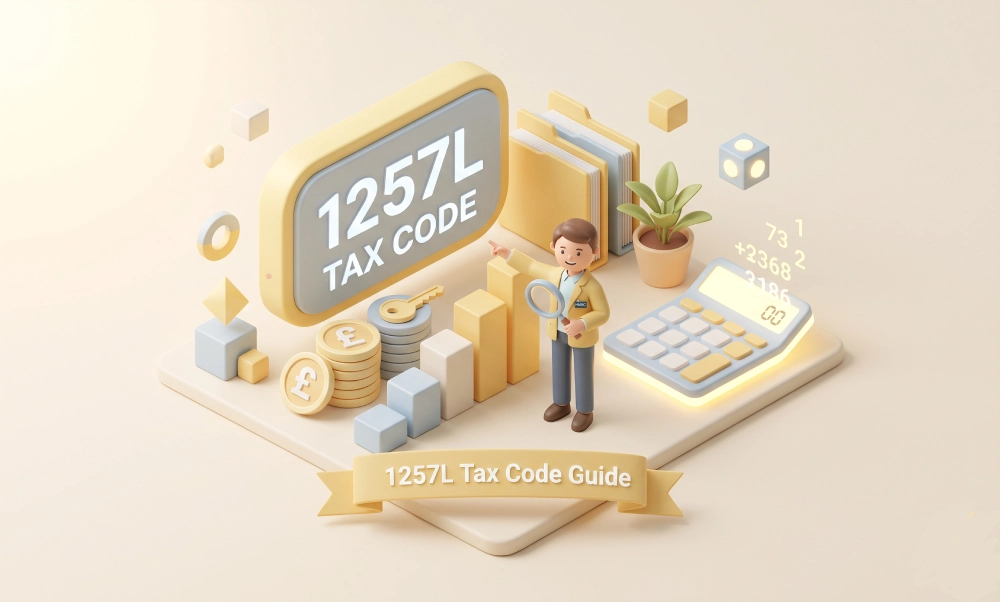
What Is the 1257L Tax Code?
1257L is currently the standard tax code that HMRC applies to most UK employees for the 2025/26 tax year. It signals to payroll that someone qualifies for the full Personal Allowance of £12,570, meaning that’s how much they can earn before Income Tax applies, and anything earned on top of that gets taxed based on their applicable tax band.
The numbers in the code, 1257, point to your tax free personal allowance for the year. You just add a zero to the end of it, so 1257 becomes £12,570. That is how much you can earn in a tax year before any income tax gets taken off you. The letter L means you are getting the standard personal allowance, nothing extra and nothing reduced. So 1257L is basically the “normal” code for someone with one job and no unusual tax situation going on.
Who Typically Gets the 1257L Tax Code?
Most people with a single job and no extra income, benefits, or unpaid tax from before will be on 1257L. If you only have one employer, don’t get taxable benefits like a company car, and haven’t underpaid tax in a previous year, this is likely the code you will see.
If any of that changes though, say you get a second job or a company benefit, your code can move away from 1257L, which we will get into a bit later.
How 1257L Affects Employees’ Take-Home Pay
Once your employee’s £12,570 allowance is used up, the rest of their income gets taxed at the normal income tax bands. 1257L doesn’t decide the rate they pay, it just decides how much of their pay is tax free before those rates apply.
Is 1257L a 20% Tax Code?
Not exactly, and this trips a lot of people up. 1257L itself isn’t a tax rate, it’s just the allowance. Once their income goes past £12,570, they start paying tax at 20% (the basic rate) up to the higher rate threshold, then 40%, then 45% if they go into the additional rate band. So they could be on 1257L and still end up paying 20%, 40%, or a mix, depending on how much they actually earn in the year.
1257L Tax Code Calculator (How Much Tax You’ll Pay)
If you want a rough idea of your employee’s tax without doing the maths yourself, here is a simple way to think about it:
- Take their annual salary.
- Subtract £12,570 (their tax free allowance).
- Whatever is left gets taxed, starting at 20% for the basic rate band, then higher bands if they earn more.
So someone earning £30,000 a year would have £17,430 taxed at the basic rate, not the full £30,000. You can also use the income tax estimator on the GOV.UK website.
Understanding the Letters and Suffixes
The number tells you the allowance, but the letters (and sometimes extra letters at the end) tell you the situation behind it. This bit is where most of the confusion comes from, so let’s break it down properly.
What Does the “L” Mean in a Tax Code?
L just means standard personal allowance, nothing added, nothing taken away. It’s the most common letter you will see attached to a tax code, and if you see 1257L, it means HMRC thinks their situation is straightforward.
What Do 1257L W1, M1 and X Mean?
Sometimes you will see 1257L with an extra bit added, like W1, M1, or X. These are what’s called non-cumulative or “emergency” style codes, and they usually show up when HMRC doesn’t have their full pay history yet, like when they start a new job partway through the tax year.
- W1 means weekly, and it means their tax is worked out just on that week’s pay, not their pay for the whole year so far.
- M1 is the same idea but for monthly paid employees.
- X is used in similar situations and just means the code is being applied on a non-cumulative basis too.
These codes usually sort themselves out once HMRC has their correct records, so if you see one, it’s not something to panic about straight away.
Is 1257L an Emergency Tax Code?
On its own, no, 1257L is just the standard code. But 1257L W1, 1257L M1, or 1257L X can act like emergency codes because they are temporary and based on incomplete information. They usually happen when an employee changes jobs or starts a new one mid year and HMRC hasn’t caught up yet.
1257L vs 1263L vs 1250L, What’s the Difference?
People often get confused between these three because they look so similar. Here is a quick table to make it clearer:
1257L vs Similar Codes
| Code | Tax-Free Allowance | Why the Difference |
|---|---|---|
| 1257L | £12,570 | Current standard personal allowance |
| 1263L | £12,630 | Slightly higher, usually because of allowable expenses added on top |
| 1250L | £12,500 | An older allowance figure, so if you see this now it’s likely outdated |
Tax Code Suffix Comparison
| Code | Meaning | When It’s Used |
|---|---|---|
| 1257L | Standard personal allowance | Most common, one job, no unusual circumstances |
| 1257L W1/M1 | Emergency style, non-cumulative | New job, or HMRC missing pay history |
| 1257L X | Emergency style, non-cumulative | Mid-year starter with no prior pay record |
| BR | Basic rate, no allowance at all | Usually a second job or pension |
| D0 | Higher rate, no allowance | Second job for higher earners |
| K | Negative allowance | Employee owes tax, often from benefits or a past underpayment |
Why Might Employees See Change in Their Tax Code?
As an employee, your tax code isn’t fixed forever. It can shift during the year or between tax years depending on your circumstances.
Changes to Income or Benefits
If you start getting a company benefit, like a car or private health cover, or if you take on a second job, HMRC will usually adjust your tax code to reflect that. Same goes if you lose a benefit, your code should move back too.
Changes to Your Personal Allowance
Every so often, the government changes the personal allowance figure itself. When that happens, everyone’s standard code updates automatically, which is exactly how we ended up moving from older codes like 1250L to the current 1257L. Employers and payroll teams have to put the right code in payroll so you accurately get paid.
Working From Home, Does It Affect Your Code?
Not directly, no. Working from home by itself doesn’t change your tax code. But if you claim tax relief for home working expenses, that can sometimes be reflected in your code depending on how HMRC processes it, so it’s worth checking your code after making a claim like that, just to be safe.
How Employees Can Check or Correct Their Tax Code
It’s always worth double-checking your code, especially after a job change, a pay rise, or a new benefit.
Checking Your Tax Code Online
You can check your current tax code through your personal tax account on the HMRC website, or just look at your latest payslip or P60. It only takes a couple of minutes.
When Should You Contact HMRC?
If your code looks wrong, or you don’t understand why it’s changed, contact HMRC directly. They are the only ones who can actually correct it, your employer just applies whatever code HMRC tells them to use.
What to Do If You Have an Emergency Tax Code
If you are on an emergency style code like 1257L W1 or M1, don’t worry too much straight away, it’s usually temporary while HMRC catches up on your details. But if it’s been more than a couple of pay periods and nothing has changed, it’s worth giving HMRC a call so it gets sorted and you’re not overpaying tax in the meantime.
Common Misunderstandings About 1257L
There are a few myths around this code that are worth clearing up.
Does 1257L Mean You Don’t Pay Any Tax?
No, it just means the first £12,570 of your income is tax free. Anything you earn above that is still taxed normally.
Can Employees Have 1257L for Two Jobs?
Usually not on both. HMRC normally puts your full personal allowance against your main job and gives your second job a different code, like BR, so you’re not getting double the tax free allowance across two jobs.
Do Employees Need to Pay Extra Tax on This Code?
No, 1257L doesn’t mean you owe extra tax, it’s just the standard code. If you did owe tax from before, you would usually see a K code instead, which reduces your allowance rather than the normal L code.
What Employers Need to Know About 1257L
If you run payroll, getting tax codes right isn’t optional, it directly affects what your employees take home and what HMRC expects from you.
Finding and Applying the Right Tax Code
HMRC sends employers tax code notices (P6 or P9 forms) which tell you exactly what code to use for each employee. Your job as an employer is just to apply what HMRC tells you, not to guess or assume.
What to Do If an Employee Has the Wrong Tax Code
If an employee flags that their code looks wrong, don’t try to fix it yourself. Ask them to contact HMRC to confirm the correct code, then update it in payroll once HMRC sends the new notice through.
Cumulative Tax Codes and In-Year Refunds
Most codes, including 1257L, work on a cumulative basis, meaning tax is calculated based on total pay and tax paid so far in the year, not just that pay period alone. This is actually helpful because if someone was overtaxed earlier in the year, they often get an automatic refund through payroll once the correct code is applied, without needing to claim anything separately.
Managing Tax Code Updates With Payroll Software
Manually tracking tax code notices for every employee gets messy fast, especially once you have more than a handful of staff. This is exactly the kind of admin that decent payroll software should be handling for you automatically, instead of you keeping tabs on it in a spreadsheet.
Making Tax Code Management Easier
1257L tax code is a standard tax code used for most employees in the UK. Today, many businesses in the UK use cloud-based payroll software that keeps them compliant by automatically applying HMRC updates. It also saves admin work when tax codes change, so you can pay your employees accurately and they can see the right tax code reflected on their payslip too.
Frequently Asked Questions
Is 1257L a Good Tax Code?
Yes, for most people it is, since it's just the standard allowance code with nothing unusual attached. It means your tax situation is straightforward.
Is L an Emergency Tax Code?
No, L on its own is standard. It only behaves like an emergency code when it's paired with W1, M1, or X, which show up when your pay history isn't fully up to date with HMRC yet.
Can Employees Have More Than One Tax Code?
Yes, if you have two jobs, each one usually gets its own code, with your main job getting the standard allowance and the second one typically getting a code like BR.
What's the Difference Between 1250L and 1257L?
They're both standard allowance codes, just from different years. 1250L reflected an allowance of £12,500, while 1257L reflects the current £12,570. If you're still seeing 1250L now, it's worth double checking that your code has actually been updated.
Does 1257L Change if You Work From Home?
Not just from working at home itself, but if you claim expenses or tax relief related to working from home, that can sometimes affect your code depending on how HMRC processes the claim, so it's worth a quick check afterward.