Performance Improvement Plan (PIP) Guide + Free Template

It’s always a challenge when your employees are struggling to meet expectations, but you want to help them. By pointing out the problems in employees’ performance, you can give clear steps that guide them on how to improve.
A performance improvement plan is one of the best ways to give these steps in a clear and organized way. In this guide, we have covered all things about PIP and also provided a free template to download so you can help employees improve in a supportive and constructive way.
What is a Performance Improvement Plan (PIP)?
A Performance Improvement Plan, also known as a performance action plan or personal improvement plan, is a formal document that helps an employee meet expectations they’re struggling with and get better at their job. A PIP outlines areas of improvement and sets measurable goals along with a timeline.
A performance improvement plan definitely works very well when it is used in the right way. 66% of employees say that if feedback is actionable and constructive, they actually want it more. And a quarter of employees leave their jobs due to poor feedback from their manager. It establishes clarity and transparency regarding performance, that’s why it is very useful for both HR and employees.
Lastly, an employee improvement plan is not always a disciplinary step and is not the same as a warning letter. It is more like a support tool that gives the employee a fair chance to fix problems. So a personal improvement plan is mainly a guide that helps the employee do better. It becomes a disciplinary step only if the employee does not follow the plan or keeps making the same mistakes.
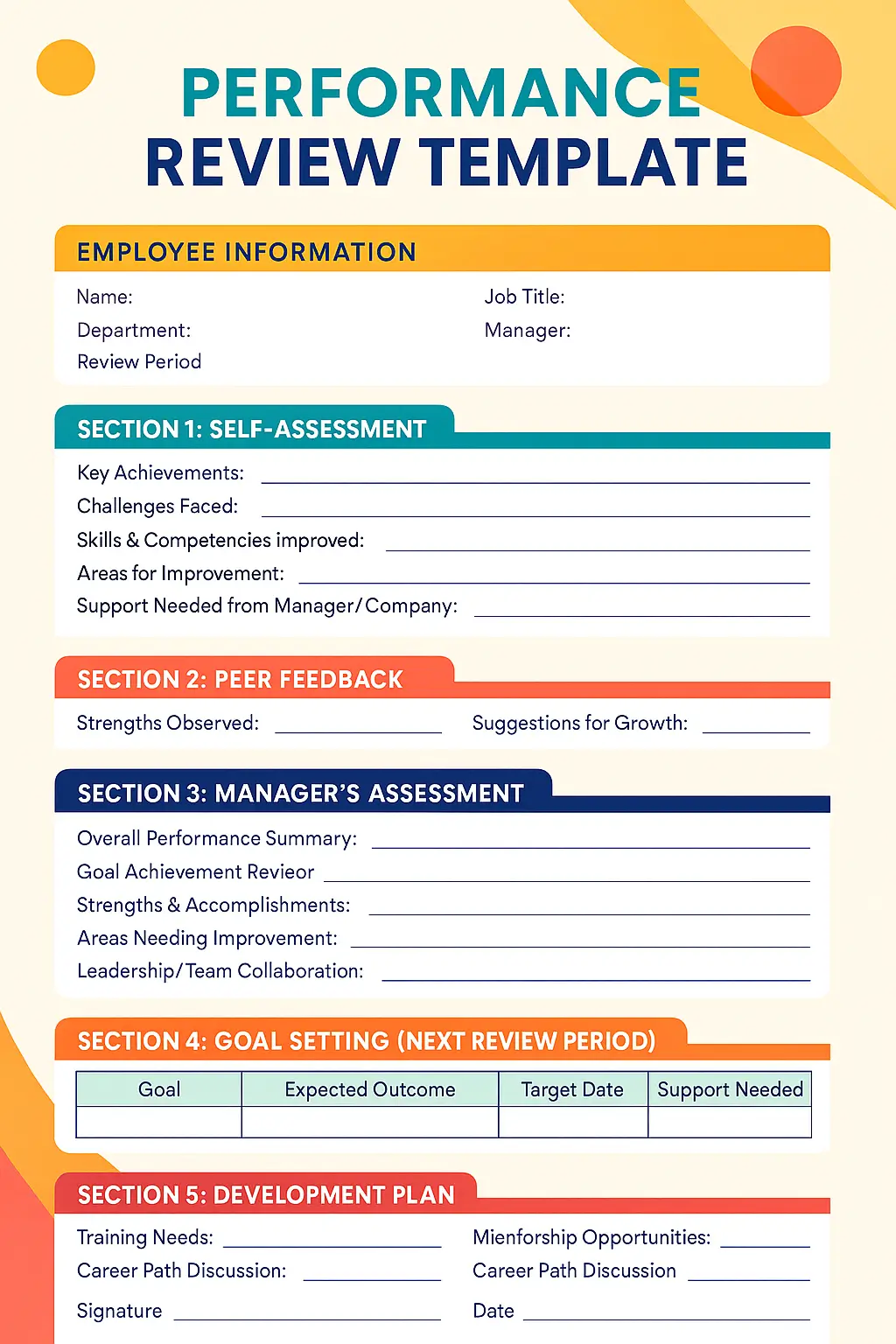
Performance Improvement Plan Template (Free Download)
A Performance Improvement Plan template is also a very simple way to create a clear and organized plan. It helps managers outline exact issues so employees know exactly what is expected.
It covers many important areas such as employee information, performance issues, measurable goals, resources for improvement, timelines and regular check-ins. Using a template makes the personal action plan process easier and saves time for managers. It also guides employees toward improvement and ensures progress is tracked effectively. You can download a free template below to get started quickly.

Enter your details below to receive the template via email. Want to suggest improvements or spot something missing? We’d love to hear from you on info@zelt.app
When Should a Performance Improvement Plan Be Implemented?
A Performance Improvement Plan should be used when an employee needs clear help to do better at work. It is not the first step. It is used when guidance and normal feedback have not worked. A personal improvement plan gives a simple path so the employee knows what to fix and how to improve.
Signs an Employee May Need a Improvement plan
An employee may need an Improvement plan when you notice repeated problems for example, the employee may miss goals or not meet the deadlines. They may deliver low-quality work or be consistently late for work. If these issues continue for many weeks even after feedback, then a plan can help give direction. A performance action plan helps when normal coaching is not enough.
Appropriate Circumstances for Issuing a PIP
An improvement plan is useful when an employee can still get better. It works when the problem is about performance, behavior, or work quality. It also helps when the company wants to offer extra support or training.
Inappropriate Circumstances for Issuing a PIP
But not every situation should use this plan. It is not right for serious issues like theft or harassment. It also should not be used when a person cannot do the job at all. If someone is a safety risk, other actions like an investigation or termination may be needed.
Is a Personal Improvement Plan Bad for Employees?
An improvement plan is not bad when used the right way. It gives clear steps and support so the employee can succeed. It only becomes a problem when it is used as pressure or punishment. A good plan helps the employee understand what is expected and shows that the company wants them to grow.
Why Employees May Need a PIP
Employees may need a support plan for many reasons, such as stress, low motivation or lack of recognition affecting their work. This plan provides guidance, sets clear goals and offers support to help them improve. It can also address office issues like poor communication or teamwork, helping employees grow and creating a positive workplace.
Benefits of a Performance Improvement Plan
There are many benefits of a performance action plan for both the company and the employee. Its main focus is to resolve specific issues but it also helps employees understand what is expected of them and how to meet those expectations. Let me quickly share some of the benefits in detail:
Culture of Accountability
It encourages employees to take responsibility for their work and helps them see what they need to do and when they need to do it. Employees know that their performance matters. This creates a culture where everyone tries their best and meets goals.
Saves Time and Money
By improving performance, a personal improvement plan can reduce the cost of mistakes or poor work. It also reduces the need to replace employees. Training and guidance help employees improve faster and save time for managers.
Reduces Liability
It also documents performance issues and the steps taken to help employees. This protects the company if legal issues happen. It also shows that the company acted fairly and gave the employee a chance to improve.
Boosts Performance and Communication
An employee improvement plan gives clear instructions and feedback. It helps employees understand what they must improve and how to do it. This improves work quality and teamwork. Employees feel supported and more confident.
How to Write an Effective Performance Improvement Plan
Writing an effective employee improvement plan means being clear, fair and supportive. The plan should help the employee understand what is expected, how to improve, and what support they will get. It should also explain the consequences if improvement does not happen.
Begin with a Conversation
Start by talking to the employee calmly. Explain the performance issues clearly and let them share their perspective. This builds trust and shows the plan is for improvement, not punishment.
Identify the Root Cause
Find out why the employee is struggling. It could be lack of skills, unclear instructions, stress or personal issues. Understanding the cause helps create a plan that actually works.
Define Measurable Goals
Set clear and realistic goals. Goals should be simple, measurable and have deadlines. Show what acceptable performance looks like, for example completing tasks on time or meeting quality standards.
Outline Support and Resources
Include the resources the employee will get, such as coaching, training, mentoring or tools. Support helps employees improve faster and feel the company wants them to succeed.
Schedule Regular Check-Ins
Plan regular meetings to review progress. These check-ins provide feedback and allow managers to adjust the plan if needed.
State Clear Consequences
Explain what will happen if goals are not met. Be clear but fair so the employee understands the seriousness of the plan.
Document Progress
Write down all steps, meetings, goals, and outcomes. Documentation protects both the employee and the company and keeps the process transparent.
Review and Next Steps
At the end of the plan, review achievements and discuss next steps. You can also use a one-on-one meeting template that helps you to document discussions and keeps everything transparent.Recognize improvements and plan for continued support. The goal is to guide the employee to succeed while keeping the process fair and clear.
Tips for a Successful Performance Improvement Plan
A performance improvement plan is most effective when it is structured, supportive and focused on improvement. Here’s how to make it work:
Focus on the positives and strengths of the employee: Highlight what the employee is doing well before discussing areas for improvement. Recognizing strengths builds confidence and motivation.
- Listen to the employee and understand their perspective: Give the employee a chance to explain challenges or obstacles. Understanding their viewpoint helps tailor the plan and shows you value their input.
- Provide guidance and advice on improvement: Offer specific steps, tips, or strategies to help the employee meet goals. Clear guidance makes expectations actionable and achievable.
- Check in regularly to track progress: Schedule weekly or biweekly meetings to review performance, discuss challenges, and provide feedback. Regular check-ins keep the employee accountable and supported.
- Find the root cause of performance problems: Identify whether issues stem from skills gaps, unclear instructions, workload, or personal factors. Addressing the root cause ensures the plan is effective.
- Train managers to handle performance conversations well: Ensure managers are prepared to give constructive feedback, handle sensitive topics, and support employees throughout the process. Proper training improves communication and outcomes.
Document all goals, KPIs, and progress. Using a performance review template will be helpful here; it will ensure you capture improvements consistently and fairly.
Performance Improvement Plan Examples
Examples help employees and managers understand how a PIP works in real life. They show clear problems, goals, and steps to improve. Here are some common examples.
Example 1: Poor Attendance
Performance issue: Employee is often late or misses work without notice, disrupting team workflow.
Main goal: Reduce absenteeism and improve punctuality.
Measurable KPIs:
- Absenteeism rate: Track percentage of missed workdays
- On-time arrival: Monitor punctuality each day
Action Plan:
- Meet with the employee to discuss attendance issues
- Set clear expectations and explain consequences if attendance does not improve
- Offer support like flexible hours if needed
- Conduct weekly check-ins to monitor progress
- Provide guidance on notifying absences in advance
Example 2: Missing Deadlines
Performance issue: Employee frequently misses deadlines, causing delays for the team and clients.
Main goal: Ensure tasks are completed on time and meet quality standards.
Measurable KPIs:
- Task completion rate: Percentage of tasks completed by deadlines
- Project timeline adherence: Track timeliness of project submissions
Action Plan:
- Identify specific tasks that were delayed
- Provide guidance on time management and task prioritization
- Schedule weekly reviews to track progress
- Explain consequences if deadlines continue to be missed
- Offer support, training, or tools to help meet timelines
Example 3: Poor Customer Service
Performance issue: Employee fails to assist customers effectively, leading to complaints and low satisfaction.
Main goal: Improve customer service quality and client satisfaction.
Measurable KPIs:
- Customer satisfaction score: Track ratings from feedback surveys
- Complaint resolution rate: Percentage of customer issues resolved on time
Action Plan:
- Identify areas needing improvement in communication and product knowledge
- Provide training, role-playing sessions, or shadowing opportunities
- Set clear goals for customer interactions
- Give weekly feedback on performance
- Explain consequences if service quality does not improve
Example 4: Negative Attitude
Performance issue: Employee shows poor attitude, refuses tasks, or complains often, affecting team morale.
Main goal: Encourage positive behaviour and teamwork.
Measurable KPIs:
- Participation in team meetings: Track engagement
- Task completion without complaint: Monitor task attitude
- Peer feedback: Collect input on teamwork and cooperation
Action Plan:
- Identify specific behaviours to change
- Provide coaching and examples of positive behaviour
- Set goals for teamwork, attitude, and participation
- Conduct regular check-ins to monitor progress
- Explain consequences if attitude does not improve
Example 5: Low Productivity
Performance issue: Employee is not completing enough work compared to peers, affecting output.
Main goal: Increase productivity to meet expected performance levels.
Measurable KPIs:
- Task completion rate: Percentage of tasks completed on time
- Output quality: Measure accuracy and quality of work delivered
Action Plan:
- Identify tasks that are challenging and provide support or training
- Set achievable productivity goals
- Conduct weekly progress monitoring
- Explain expected results and consequences if productivity does not improve
- Offer tools, resources, and mentoring to boost performance
These examples show how a PIP works as a structured tool, helping employees improve clearly and fairly while providing support.
How Managers Should Address Attitude or Behaviour in a PIP
Sometimes performance problems are not about skills but about attitude or behaviour. A negative attitude can affect teamwork and slow down projects. A personal improvement plan can help employees understand how to behave in a professional and positive way.
Be Specific
Managers should clearly explain the behaviours that need to change. For example, interrupting teammates, refusing tasks, or complaining often. It is important to give real examples so the employee understands the problem. Being specific helps the employee know exactly what to improve.
Focus on Performance, Not Personality
A PIP should focus on actions and work behaviour, not personal traits. For example, say “complete tasks on time” instead of “you are lazy.” This keeps the plan fair and avoids conflicts. Focusing on performance helps the employee see what they can change.
Offer Support and Guidance
Managers should provide support to help the employee improve. This can include coaching, mentoring, or training. Giving examples of good behaviour can also help. Regular feedback shows the employee that the company wants them to succeed.
Check Progress Regularly
It is important to monitor progress with weekly or biweekly check-ins. Managers should discuss what is improving and what still needs work. Positive changes should be recognized to motivate the employee. Feedback should be honest but supportive.
Set Clear Goals and Consequences
The employee should know the expected behaviour and the timeline to improve. They should also understand the consequences if improvement does not happen. Clear goals make the PIP fair and easy to follow.
Encourage Open Communication
Managers should create an environment where employees feel safe to talk. Employees should be able to ask questions, share challenges, and request help. Open communication builds trust and makes this plan more effective.
How to Complete an Employee Improvement Plan
Completing a performance improvement plan shows whether an employee has improved and guides next steps. Clear documentation and review make the process fair and supportive.
1. Review and document progress: Check performance against the plan goals. Note successes and areas to improve and highlight positive progress.
2. Conduct a final meeting: Meet privately to give feedback, celebrate wins and hear the employee’s perspective.
3. Address the results
- Goals met: Recognize improvements and set new development goals.
- Goals not met: Discuss progress, provide support and outline next steps.
4. Provide next steps and support
Offer training, mentoring or resources to help the employee continue improving.
5. Document everything
Record meetings, goals and follow-ups. Documentation protects the organization and ensures transparency.
At all, completing a performance action plan effectively supports employee growth, maintains fairness and ensures accountability.
When Personal Improvement Plan Is Not the Right Solution
It’s not suitable in every situation. It should not be used for serious misconduct like theft or harassment. It may also be ineffective if the employee lacks the skills to perform the role or if there is a safety risk.
For new employees on probation, regular feedback may be better than a personal improvement plan. But, repeating it for an employee who has already failed previous plans may not work and other actions or role changes may be needed. So, choosing the right approach ensures fairness and effectiveness.
Timeframes and Success Rates
A personal improvement plan usually lasts 30, 60 or 90 days but the length depends on the complexity of the improvement needed. Shorter periods are for small issues and longer periods are for major performance gaps.
The success rate of this plan depends on how clearly it is written and how supportive the manager is. Regular feedback, realistic goals and proper resources increase chances of success. They often work well when employees are willing to improve and managers guide them properly.
How Employees Should Respond to a PIP
Employees also play a role in making this plan successful. They should understand the plan and follow it carefully.
- Be Honest with Yourself: Employees should accept the areas they need to improve. Being honest about weaknesses helps them focus on what matters.
- Make Improvements Your Priority: Employees should treat the PIP as a chance to grow. Completing tasks on time and following goals shows commitment.
- Seek Help When Needed: If the employee struggles, they should ask for help. Managers are there to guide and support. Using available resources improves chances of success.
- Stay Positive: A PIP is not punishment. Employees should stay positive and motivated. Improvement is possible with effort and guidance.
Manage employee performance with Zelt
Creating and managing a performance improvement plan (PIP) becomes much easier when your performance management software runs smoothly. At Zelt, we help you to automate reviews, gather feedback in one place and link goals directly to development plans so managers spend less time on admin and more time supporting employees. With everything centralised, you can create, track and complete PIPs faster and more fairly.
See Zelt in Action
Speak to us to learn how you can run review cycles, collect employee surveys and track goals in a single system.
Frequently Asked Questions
What is a PIP?
In HR, PIP stands for Performance Improvement Plan (sometimes called a Personal Improvement Plan or employee improvement plan). It is a formal document that identifies performance issues and helps employees improve their skills and work outcomes. A PIP also stands for Personal Independence Payment in the UK, which is a benefit for people with long-term conditions or disabilities.
Can an employee refuse to sign an employee improvement plan?
Yes, an employee can refuse to sign but it is better to discuss concerns. Signing shows understanding of the plan.
Can a PIP lead to termination?
Yes, if the employee does not meet the goals it can lead to termination. The personal improvement plan gives a fair chance before consequences.
Should I quit if I get a PIP?
Not necessarily. The main purpose of a PIP is to support improvement not punish you. Employees can use it as an opportunity to address performance issues and show growth. Quitting should only be considered if the role or environment isn’t the right fit, not simply because of a performance improvement plan.
What are the key components of a PIP?
The Key components of a performance improvement plan are:
- Goals
- Timelines
- Support
- Consequences
- Documentation.
These make it clear and fair.
How should a manager prepare an employee improvement plan?
Managers should gather facts, identify problems and plan support. The PIP should be clear and structured.
How can managers support employees through a personal action plan?
Managers should give guidance, feedback, and resources. Regular meetings help employees stay on track.