10 Best HRIS Software in 2026: Compare Top HRIS Systems
For growing businesses, managing HR can be tricky. This is especially true when using spreadsheets, emails, and separate tools. But an efficient HRIS can be helpful here. It can centralise all employee data, automate routine tasks like payroll and leave tracking so HR teams save time and leaders make smarter decisions.
But there are too many solutions available today that make it hard to choose the perfect one. To solve your problem, we have reviewed the 10 best HRIS software globally so you can find the right fit for your business.
Quick Overview: Best HRIS Software in 2026
Don’t want a detailed overview? Here is the quick review of the best HRIS software in 2026:
| Platform | Key Features | Best For | Starting Price |
|---|---|---|---|
| Zelt | All-in-one HR, payroll, benefits, GDPR compliance | Growing companies | From $5/user/month |
| Rippling | HR + IT + payroll + compliance in one | Automation & scaling | From $8/user/month |
| BambooHR | Employee database, onboarding, reporting | Mid-sized teams | From $6/user/month |
| HiBob | Culture, engagement, performance analytics | Engagement-focused mid-sized firms | From $7/user/month |
| ADP | Payroll, benefits, compliance, global-ready | Large enterprises & global operations | From $10/user/month |
| UKG Pro | Payroll, performance, analytics, HR management | Large businesses with complex HR | From $12/user/month |
| Workday | HR + finance integration, advanced analytics | Global enterprises | Custom pricing |
| Paylocity | Payroll, HR, benefits, mobile self-service | Mid-sized companies | From $6/user/month |
| Gusto | Payroll, onboarding, benefits, simple HR | Small businesses | From $6/user/month |
| Personio | Employee data, recruiting, payroll, time tracking | Europe-focused SMEs | From €6/user/month |
Note: Pricing is estimated. Contact the provider for the latest and most accurate pricing.
What Is HRIS Software?
HRIS (Human Resource Information System) is a software that helps companies manage all employee-related processes in one place. It includes core features like payroll, benefits and time tracking. It helps HR teams by integrating HR activites with IT services so they can track all HR processes efficiently.
HRIS vs HRMS vs HCM
HRIS, HRMS & HCM are often used interchangeably but they are slightly different from each other. Let me quickly share with you:
HRIS: It manages core HR tasks like employee records, payroll and leave.
HRMS: It includes HRIS features plus recruitment, training and performance tools.
HCM: It covers HR, workforce planning, talent management and analytics for strategic decisions.
Key HR Processes an HRIS Manages
- Employee Data: Store personal details, job roles and history.
- Payroll: Manage salaries, taxes and deductions.
- Benefits: Track health insurance, pensions and perks.
- Performance: Set goals, monitor progress and conduct reviews.
- Onboarding: Help new hires complete tasks and get up to speed.
In short, an HRIS keeps HR organised, saves time for small and mid-sized business owners, and gives leaders the data they need to make smarter decisions.
10 Best HRIS Software in 2026
Choosing the right HRIS can feel overwhelming because there are so many options available. We have compiled a detailed overview of the top HRIS systems in 2026 below, including their main strengths and who they’re best suited for.
1. Zelt — Best HRIS for Growing Businesses
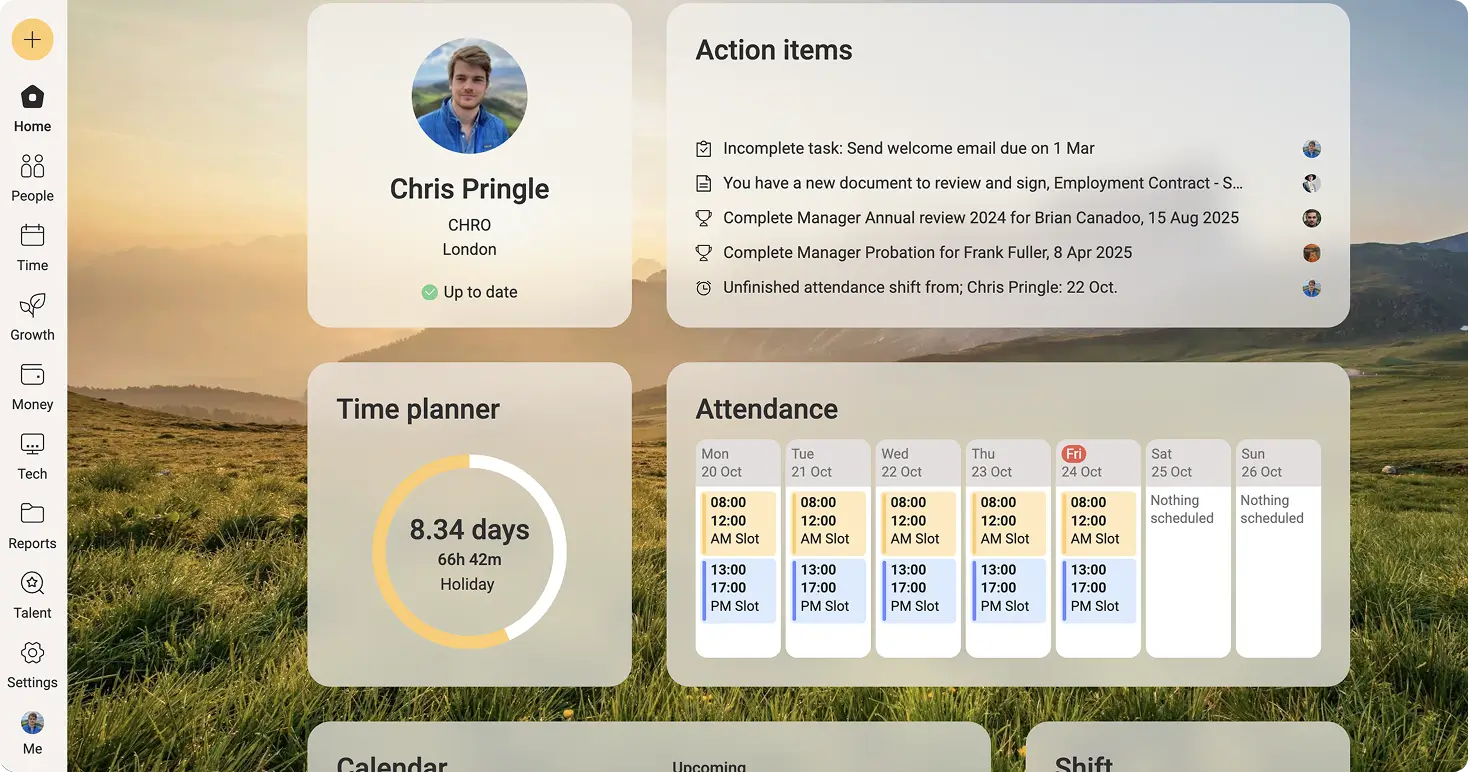
Zelt is a modern HRIS built for UK and Global companies, combining ease of use with strong compliance and automation features. It helps HR teams manage employees efficiently while giving staff more control over their own information.
Key Features
- Centralised employee database for personal and job details
- Recruitment and onboarding workflows
- Time tracking, leave, and attendance management
- Payroll and benefits administration
- Performance management and goal tracking
- Employee self-service portal
- GDPR-compliant security and reporting
- Integrations with accounting, payroll, and productivity tools
Pros
- Designed specifically for UK businesses and compliance.
- Easy-to-use interface for HR teams and employees
- Quick setup and excellent customer support
- Scales with company growth
Best For
- Small to mid-sized companies looking for a complete HRIS
- Teams that want an all-in-one HR system with strong compliance
Zelt’s pricing depends on company size and selected products as it is a modular platform. Pricing starts at $5/user/month.
G2 Review: “I particularly love the performance growth module as it has made my review process so much easier. I have ratings available, I am no longer chasing for managers or staff to complete, Zelt does this for me” — Claire Castle, HR Director @ Croci Collective
Speak to us to see how Zelt simplifies HR management with employee data, payroll, benefits, and analytics in one platform.
2. Rippling
Rippling is a cloud-based HRIS that connects HR, IT, and payroll in one platform. It’s best for companies that want to manage devices and employee data from a single system.
Key Features
- Employee database management
- Payroll automation and benefits tracking
- Onboarding and offboarding workflows
- Time and attendance tracking
- Integration with IT systems and apps
Pros
- Combines HR and IT management
- Strong automation capabilities
- Scalable for growing teams
Best For
- Mid-sized to large businesses with multiple integrations
- Companies looking to combine HR and IT management
Estimated Price: $8–$12 per employee/month
3. BambooHR
BambooHR focuses on HR analytics and employee experience. Its intuitive interface helps teams manage people data and reports with minimal effort.
Key Features
- Centralised employee records
- Performance management and goal tracking
- Time-off and attendance tracking
- Reporting and HR analytics
- Employee self-service portal
Pros
- Easy to use and implement
- Strong reporting and analytics
- Great for improving employee engagement
Best For
- Small to mid-sized companies seeking simplicity and insights
Estimated Price: $6–$12 per employee/month
4. HiBob
HiBob is designed for modern workplaces with features to engage employees and manage HR processes digitally.
Key Features
- Employee database management
- Onboarding and offboarding automation
- Time and attendance management
- Performance tracking and surveys
- HR analytics
Pros
- Fun and intuitive interface
- Flexible for global teams
- Good for culture-focused organisations
Best For
- Companies with tech-savvy employees
- Mid-sized businesses looking for modern HR features
Estimated Price: $7–$15 per employee/month
5. ADP Workforce Now
ADP Workforce Now is a comprehensive platform covering HR, payroll, and compliance. It’s well-known globally for enterprise-grade solutions.
Key Features
- Payroll and benefits administration
- Employee database management
- Time tracking and scheduling
- Compliance and reporting tools
Pros
- Trusted by large companies worldwide
- Extensive payroll and compliance support
- Scalable for multi-country operations
Best For
- Large organisations or businesses expanding globally
Estimated Price: $10–$20 per employee/month
6. UKG Pro
UKG Pro (formerly UltiPro) excels in talent management, payroll, and HR analytics, making it suitable for organisations with complex HR needs.
Key Features
- Employee database and HR management
- Payroll and benefits administration
- Performance and succession planning
- HR reporting and analytics
Pros
- Strong analytics and reporting
- Flexible for large enterprises
- Advanced HR and payroll features
Best For
- Large businesses with sophisticated HR processes
Estimated Price: $12–$25 per employee/month
7. Workday
Workday is a cloud HR platform with robust tools for HR, finance, and analytics. It’s designed for enterprises needing powerful reporting and workforce planning.
Key Features
- Central employee records
- Payroll and finance integration
- Performance and talent management
- Workforce analytics and planning
Pros
- Very powerful reporting and insights
- Enterprise-level features
- Highly scalable
Best For
- Global enterprises with complex HR and finance needs
Estimated Price: Custom pricing (enterprise-focused)
8. Paylocity
Paylocity combines payroll, HR, and benefits management with a strong mobile-friendly self-service portal.
Key Features
- Payroll and compensation management
- Employee database and HR tools
- Time and attendance tracking
- Self-service portal for employees
Pros
- User-friendly and mobile-friendly
- Strong integration options
- Good for mid-sized teams
Best For
- Mid-sized companies wanting a reliable all-in-one solution
Estimated Price: $6–$15 per employee/month
9. Gusto
Gusto is popular among small and mid-sized businesses for payroll, benefits, and HR management.
Key Features
- Payroll and tax management
- Employee onboarding
- Benefits administration
- Employee self-service portal
Pros
- Simple and intuitive interface
- Fast setup for small businesses
- Handles payroll and HR in one system
Best For
- Small businesses seeking an easy-to-use platform
Estimated Price: $6–$12 per employee/month
10. Personio
Personio is a European HRIS for small and mid-sized companies, providing recruiting, HR management, payroll, and time tracking.
Key Features
- Centralised employee data
- Recruitment and onboarding
- Payroll and benefits administration
- Time and attendance tracking
- Employee self-service
Pros
- Tailored for European companies
- Covers all core HR functions
- Good reporting and analytics
Best For
- Small to mid-sized European businesses
Estimated Price: €6–€15 per employee/month
Why Companies Use HRIS Software
In this modern world, many HR teams are still managing employee records, leave requests and reports using spreadsheets or multiple tools. This can quickly become difficult as a company grows. An HRIS helps bring structure to these processes by storing employee information in one system and supporting everyday HR work. Let me share a few key reasons why many organisations choose it.
Centralised Employee Data
One of the main benefits of an HRIS is having all employee information stored in one place. HR teams can manage personal details, job roles, salary records, documents and leave history within a single platform. This makes it much easier to find accurate information when needed and helps reduce mistakes that can happen when data is spread across multiple files or systems.
Automation of HR Tasks
Many HR processes follow the same steps each time such as onboarding new employees, approving leave requests or sending reminders for performance reviews. However, this software automates these routine tasks, allowing HR professionals to spend less time on administrative work and more time supporting employees and improving workplace processes.
Improved Compliance and Reporting
Companies must keep employee records organised and follow various employment and data protection regulations. HRIS software helps HR teams maintain accurate records and generate reports when needed. This makes it easier to track important information, prepare workforce reports, and ensure company policies and documentation are properly managed.
Better Employee Experience (Self-Service Portals)
Many modern HRIS platforms include employee self-service portals. These allow employees to update their personal details, request leave or PTO, view documents or access company policies without contacting HR. This gives employees quicker access to information while also reducing the number of routine requests HR teams need to handle.
Must-Have HRIS Features in 2026
HRIS has evolved a lot over the past few years. Earlier systems mainly stored employee records but modern HRIS platforms now support many core HR processes in one place. When companies choose HRIS software today, they usually look for tools that help manage employees, automate routine work and provide useful workforce insights. Let me walk you through some of the most important features businesses should expect from an HRIS in 2026.
Employee Database Management
A strong HRIS should provide a central employee database where HR teams can store and manage employee information securely. This usually includes personal details, job roles, compensation records, employment documents and department information. HR teams quickly access accurate information whenever they need it by having all this data organised in one system.
Recruitment and Onboarding Tools
Many platforms now include tools that support hiring and onboarding new employees. HR teams can track candidates, manage job applications and move successful candidates into onboarding workflows. It helps companies create a smoother start for new employees. This way, once a new hire joins, the system can guide them through tasks like document submission, policy acknowledgement and training setup.
Time Tracking and Absence Management
Tracking working hours and managing employee leave is another key HR function. These systems often provide tools for time tracking, holiday requests and absence management. Employees can submit leave requests through the platform, while managers can review and approve them easily.
Payroll and Benefits Administration
Some HRIS platforms also connect with payroll systems or include built-in payroll features, helping HR teams to manage salary information, benefits and deductions more efficiently. Organisations can reduce manual data entry and ensure that employee compensation information stays accurate by linking employee data with payroll records.
Performance Management Tools
Many modern software solutions support performance management processes. HR teams and managers can set goals, run performance reviews and track employee progress throughout the year. This helps organisations create clearer feedback processes and gives employees better visibility into their development and performance expectations.
Employee Self-Service Portals
Self-service portals are an important feature in many platforms. They allow employees to access and update their own information without needing to contact HR. Employees and HR teams can save time with it. They can usually update personal details, request leave, review documents and check company policies through the system.
HR Analytics and Reporting
Another valuable feature of HRIS is analytics and reporting. It has the ability to generate HR reports and workforce insights. This software can help HR teams track important metrics such as employee turnover, absence trends and workforce growth. These insights support better decision-making and allow leadership teams to understand how their workforce is evolving.
Security and GDPR Compliance
Security and data protection are essential because HR systems store sensitive employee data. Reliable HRIS platforms include security controls, data access permissions and compliance tools that help organisations manage employee information responsibly. For companies operating in the UK and Europe, systems often support GDPR requirements for data protection and record management.
Integrations with Payroll, Accounting, and ATS
Finally, modern HR systems should be able to connect with other business tools. Many HRIS platforms integrate with payroll systems, accounting software, applicant tracking systems (ATS) and communication tools. These integrations allow companies to connect different processes and reduce the need to manually move data between systems.
How to Choose the Right HRIS for Your Business
Choosing the right HRIS is an important decision because the system will support many of your day-to-day HR operations. Different companies have different needs, so it helps to look at a few key factors before selecting a platform.
First, consider your company size and growth plans. Some HRIS tools are designed for small teams, while others are built for larger organisations with more complex HR processes. A good system should support your current workforce and still work well as your company grows.
Next, think about integration requirements. Many businesses already use tools for payroll, accounting, recruitment, or communication. An HRIS should connect easily with these systems so employee data can move between platforms without manual work.
Another important factor is ease of use. HR software should be simple for both HR teams and employees to navigate. If a system is difficult to use, employees may avoid it, which reduces the value the software provides. A clean interface and straightforward workflows can help encourage adoption across the company.
You should also review security and compliance features. Since HR systems store sensitive employee information, it is important to choose a platform that protects data properly and supports relevant compliance standards such as GDPR and other data protection regulations.
Finally, look at the budget and pricing model. HRIS providers often charge per employee or offer tiered pricing based on features. It is helpful to compare costs alongside the features offered so you can choose a system that fits both your operational needs and your budget.
HRIS Implementation Considerations
Implementing a new HRIS is more than just signing up for software. It’s a process that affects your HR team, employees, and overall business workflows. Planning carefully can make the transition smoother and ensure the system delivers real value.
Here are some key areas to focus on during implementation:
- Data Migration – Moving employee records from old systems or spreadsheets into your new HRIS needs careful attention. Clean and accurate data ensures the system works correctly from day one.
- Training HR Teams – Even the best software is only useful if your HR team knows how to use it. Providing proper training and resources helps staff adopt the system confidently.
- Integration with Payroll and Finance Tools – Your HRIS should connect with existing payroll, accounting, and other business systems. This reduces manual work and ensures data flows seamlessly between platforms.
- Change Management – Introducing a new system can be a big change for employees and managers. Communicating clearly, showing benefits, and providing support helps everyone adapt quickly.
Taking these steps seriously will make your HRIS implementation smoother, reduce errors, and help your company get the most out of the software.
How Much Does HRIS Software Cost?
When choosing an HRIS, pricing is an important factor to consider. The cost can vary depending on the size of your business, the features you need, and whether you want basic tools or advanced capabilities. Below is a simple breakdown to help you understand typical HRIS pricing ranges and examples of systems that fit each category.
| Business Size | Typical Cost (per employee per month) | Examples | Notes |
|---|---|---|---|
| Small Business | $5 – $10 | Zelt, BambooHR, Gusto | Great for small teams needing core HR features like employee data, leave tracking, and basic reporting. |
| Mid-Market | $10 – $25 | Zelt (advanced plans), Rippling, HiBob | Includes more tools such as performance management, integrations, and analytics. |
| Enterprise | Custom Pricing | Workday, UKG Pro, ADP Workforce Now | Tailored solutions designed for large organisations with complex HR needs and custom integrations. |
The actual price you pay depends on how many employees you have, which features you choose, and whether you need add‑ons like integrations or dedicated support. Knowing these price ranges and example systems can help you plan your budget and decide which HRIS fits your business best.
Benefits of Using HRIS Software
Using HRIS software isn’t just about storing employee data. It can have a real impact on how HR teams work and how employees experience their workplace. Let me share some of the main benefits companies see when they use a modern HRIS.
Reduced Administrative Workload
One of the biggest advantages of an HRIS is that it takes over routine HR tasks. Things like tracking leave, updating employee records, sending reminders, or generating reports can all be automated. This frees up HR teams to focus on more strategic work, such as employee development and culture initiatives.
Improved HR Decision-Making
An HRIS provides accurate and up-to-date data at your fingertips. With insights into turnover, attendance, performance, and workforce trends, HR and leadership teams can make smarter decisions. Instead of guessing, they can rely on real data to plan hiring, training, and team management.
Better Employee Engagement
Many HRIS platforms include self-service portals and performance tools. Employees can update their own information, request leave, track goals, and view benefits, which gives them more control and visibility. This transparency improves engagement and helps employees feel supported by the company.
Stronger Compliance Management
HRIS software helps companies stay on top of regulations and company policies. It stores documents securely, tracks policy acknowledgements, and generates audit-ready reports. This reduces the risk of compliance issues and ensures the organisation meets legal and regulatory requirements efficiently.
Streamline Your HR Operations with Zelt
Let me share why Zelt is the top choice for UK & global businesses. It’s an all-in-one HRIS that brings together employee data, payroll, benefits, performance and onboarding in one easy-to-use platform. HR teams can automate routine tasks, reduce errors and focus on supporting employees, while staff enjoy more control over their own information through self-service portals.
Designed for small to mid-sized businesses companies, Zelt is GDPR-compliant, integrates smoothly with your existing tools and scales as your business grows. By choosing Zelt, you get a system that not only simplifies HR work but also enhances employee experience, ensures compliance, and supports smarter business decisions.
Frequently Asked Questions
What is the difference between HRIS and HRMS?
An HRIS focuses on core HR tasks like storing employee records, managing payroll, leave, and benefits. An HRMS includes all HRIS features plus extra tools for recruitment, training, and performance management. In short, HRMS is a more advanced version of HRIS.
What is the most popular HRIS software?
Popular HRIS platforms include Zelt, BambooHR, Rippling, HiBob, and ADP Workforce Now. In the UK, Zelt is widely chosen for its all-in-one features, GDPR compliance, and ease of use.
Is HRIS suitable for small businesses?
Yes! Modern HRIS platforms like Zelt, Gusto, and BambooHR are designed to support small teams. They help streamline HR processes, save time, and give employees access to self-service tools without requiring a large HR department.
How long does HRIS implementation take?
Implementation usually takes a few weeks to a few months, depending on company size, the amount of data to migrate, and integrations with payroll or other systems. Platforms like Zelt are designed for fast setup, so small to mid-sized businesses can be up and running quickly.